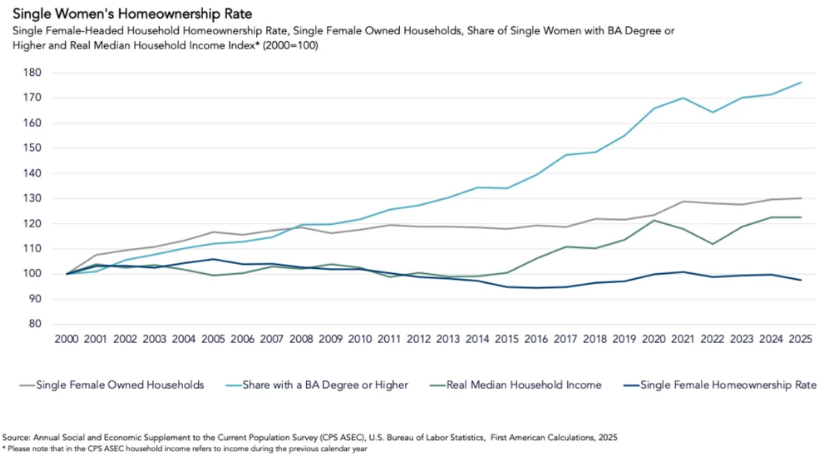
A record number of single women in the United States owned homes in 2025, even as lingering affordability challenges continued to strain buyers.
According to data from the latest First American housing trends report, more than 20 million single women were homeowners last year, the highest count on record.
However, the homeownership rate — the share of all single‑woman households that own their homes — slightly edged down from 51.9% to 50.9%. This rate decline reflects faster household formation among single women rather than a drop in actual ownership.
Affordability Pressures Persist
Housing affordability remains a key issue for would‑be buyers across the market. Though conditions have improved slightly compared to recent years, mortgage rates and home prices remain elevated relative to historical norms.
These factors continue to limit access for some buyers — particularly first‑timers and lower‑income households. Inventory constraints in many markets also keep competition tight and prices high. Even in this environment, single women’s absolute number of homeowners grew, indicating resilience among this demographic despite headwinds.
Structural Gains Support Continued Participation
Long‑term structural trends appear to support single women’s continued engagement in the housing market. Educational attainment among single women has risen, with those holding a bachelor’s degree or higher increasing from around 20% in 2000 to 35% in 2025. At the same time, real median household income for single women improved over time, boosting purchasing power. These gains help explain why more single women are entering homeownership even as affordability remains challenged.
Wealth‑Building Through Homeownership
For many single women, owning a home continues to be viewed as a critical pathway to long‑term wealth accumulation. Mortgage payments build equity over time, and homes historically appreciate in value, making homeownership an important financial strategy.
“While headline homeownership rates can fluctuate from year to year, they do not always capture the full picture beneath the surface," said First American Deputy Chief Economist Odeta Kushi. "That wealth-building potential remains a powerful motivator, particularly for single women seeking financial stability and independence. With affordability improving to its best level since 2022, market conditions may increasingly support more women embracing the long-term commitment to building wealth through homeownership.”
Despite the slight rate dip, the total count of single women homeowners grew — a sign that long‑term fundamentals and personal financial priorities continue to drive this group into the housing market.