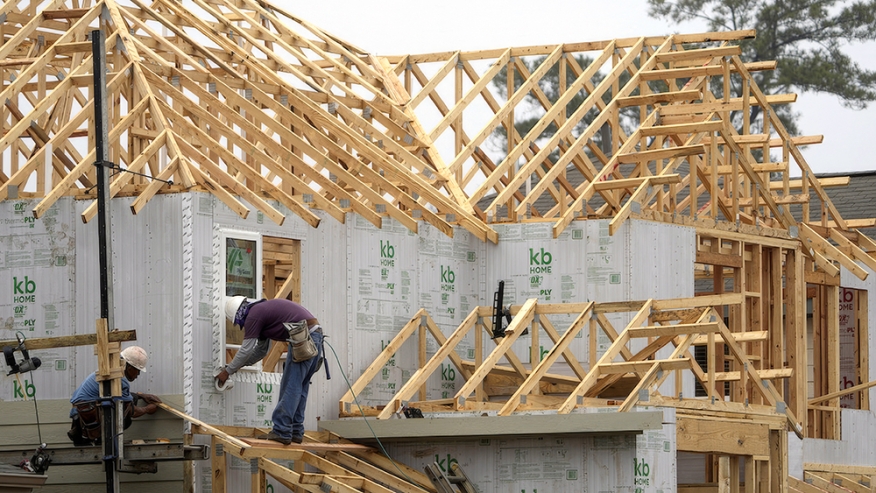
New housing should continue to arrive at a strong pace for several years because so much construction has already started, said Daniel McCue, a senior research associate at Harvard University’s Joint Center for Housing Studies.
“New construction can really only slow overheated rental rates, but it’s really hard-pressed to bring down rents or make things more affordable for people at the bottom,” McCue said. “Our focus is not on the overall shortage of housing units, but on the specific shortage of affordable and available homes for low- and moderate-income people.”
The housing unit data released in May 2024, which tracks changes through the middle of 2023, shows continued increases across the country, with about 1.6 million new units annually for the past two years.
Geographic Winners
Increases were concentrated in the West and South, with half the 4.8 million new units since 2020 in a handful of states: Texas (about 806,000), Florida (586,500), California (371,000), North Carolina (270,500), Georgia (200,000), and Tennessee (164,000).
Percentage increases were highest in fast-growing Western states: Utah (up 9% since 2020), Idaho (up 8%), and Texas (up 7%). Five states had 6% growth in housing units: South Carolina, South Dakota, Florida, Colorado, and North Carolina.
Arizona, Georgia, and Nevada — all of which are key swing states in this year’s presidential election — were not far behind, with 5% growth in housing units.
The housing shortage has become a major political talking point, even as states scramble to get more units built and people housed.
Even with Utah’s nation-leading growth in housing units for the decade, for example, Republican Gov. Spencer Cox called high housing prices “the single largest threat to our future prosperity” in his State of the State address this year.
“Housing attainability is a crisis in Utah and every state in this country,” Cox said, announcing a plan to build 35,000 small “starter” single-family homes in the next five years.
The Federal National Mortgage Association, known as Fannie Mae, reported last year that the typical homebuyer paid 35% of their income in mortgage payments in October, the highest since at least 2000.
A Utah-based think tank, the Kem C. Gardner Policy Institute at the University of Utah, in a report last year said the pandemic years brought a boom-and bust-cycle to the state’s housing construction. New permits increased 26% in 2021, only to drop 21% the next year as interest rates climbed. The new U.S. Census Bureau figures show new units in the state peaking at 38,500 in 2022 and falling back to about 30,000 in 2023.
No People, No Growth
All states saw some housing growth, according to the Stateline analysis and census data, but it was slowest in some states affected by poverty or low population growth. There was only a 1% increase in housing units since 2020 in Rhode Island, Illinois, West Virginia, Connecticut, Alaska and New Jersey.
Alaska Republican Gov. Mike Dunleavy also mentioned housing affordability as one of the biggest challenges facing the state this year in his State of the State address. Dunleavy proposed a state-funded down payment assistance program for first-time homebuyers, and lumber grading changes designed to make homebuilding materials more affordable.
New Jersey Democratic Gov. Phil Murphy mentioned in his State of the State address the state’s low housing stock at a time when tens of thousands of New Yorkers are seeking suburban housing there.
“If our population grows while our housing stock remains steady, homeownership will be a luxury reserved only for those at the top. That is untenable,” Murphy said.