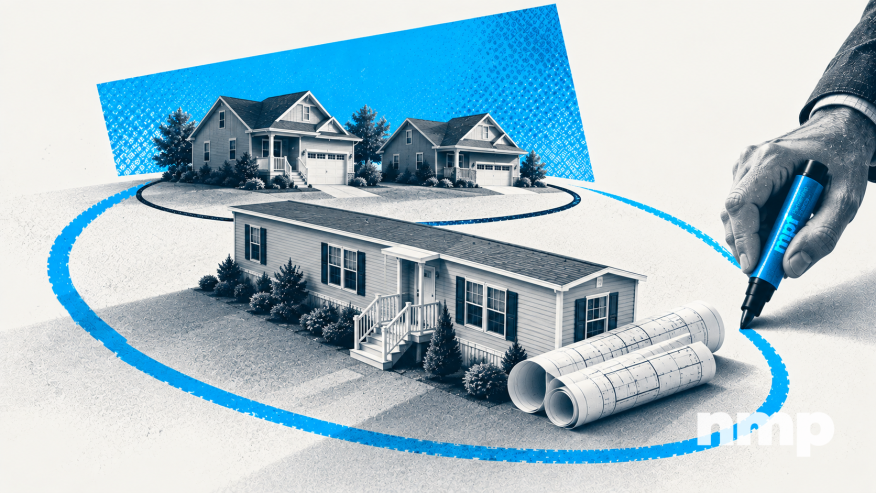
Community banks and credit unions participating in the Mortgage Partnership Finance Program have gained additional ways to move affordable, manufactured-home, and renovation loans into the secondary market.
The program expanded its MPF Traditional guidelines to cover more loans originated through affordable-lending programs, single-wide manufactured homes, home-improvement and renovation mortgages, and certain lender-funded housing assistance programs.
For participating institutions, the change is more than an expanded product menu. It creates a secondary-market outlet for qualifying loans that may not have fit the program’s previous delivery requirements.
The MPF Program allows eligible Federal Home Loan Bank members to sell conventional conforming and government-backed mortgages to their FHLBank or another investor. Participating institutions may have options to retain servicing, depending on the product and execution.
Affordable Loans Up To 97% LTV
Under the revised guidelines, qualifying loans originated through programs for low-income borrowers can carry loan-to-value ratios as high as 97%.
The announcement does not create a universal 3% down MPF product. Loans must satisfy the requirements of the applicable affordable-lending program, including any income restrictions, along with MPF underwriting and delivery rules.
The expansion could nevertheless give participating community lenders more flexibility to serve borrowers who have sufficient income to manage a mortgage but limited cash available for a down payment.
That issue has become increasingly important as higher home prices, closing costs, and mortgage rates place more borrowers near the edge of qualification. NMP recently reported that inventory has recovered without producing a comparable rebound in home sales, leaving affordability as the central barrier for many buyers.
Single-Wide Manufactured Homes Become Eligible
The expanded manufactured-housing guidelines include qualifying single-wide homes with mortgage terms of up to 30 years.
Permitted down-payment sources can include gift funds and land-in-lieu arrangements, in which a borrower’s equity in land can contribute toward the transaction. The guidelines also allow certain forms of secondary financing.
Manufactured homes are often discussed as one answer to the nation’s housing shortage, but financing can be more complicated than it is for a traditional site-built property. Eligibility may depend on how the home is titled, whether the borrower owns the underlying land, the property’s foundation, and whether the transaction qualifies as real-property financing.
The MPF change does not remove those considerations. It does, however, give participating lenders another potential route for selling qualifying loans after origination.
Renovation Loans Come With A Timing Requirement
MPF Traditional eligibility now includes certain home-improvement and renovation loans based on the property’s as-completed appraised value.
But the work must be finished before the mortgage is sold through the MPF Program.
That condition carries an operational implication for lenders. The originating institution must manage the loan through the renovation period and confirm completion before it gains access to the MPF sale execution. The program is therefore providing a secondary-market exit for completed renovation loans, not purchasing the mortgage while construction remains underway.
The distinction will affect warehouse planning, contractor oversight, and the documentation lenders need before delivery.
The expansion arrives while builders and lenders are looking for more ways to work around limited affordability and uneven housing supply. Single-family construction rebounded in August, but permits and completions remained weak. Renovation financing can help bring older properties back into the usable supply without waiting for new construction.
Lender-Funded Assistance Also Qualifies
MPF Traditional will also recognize qualifying lender-funded affordable-housing assistance programs serving low-income borrowers or eligible neighborhoods.
“The enhancements directly address loan types lenders asked the MPF Program to accommodate,” said Thomas Hazlett, senior vice president of mortgage lending at New Market Bank, an MPF participant.
The MPF Program is administered through participating Federal Home Loan Banks and is not available to every mortgage lender. Institutions must be eligible FHLBank members, receive approval as participating financial institutions, and follow the requirements of the particular MPF product.
For those already using MPF Traditional, the revised guidelines widen the range of loans that can potentially be originated for local borrowers and later sold. The practical value will depend on whether those institutions have the staff, products, and local demand to use the new eligibility.