A newly released Redfin analysis of U.S. Census Bureau data shows a significant structural shift in the nation’s rental housing landscape, with single-family home rentals declining to historic lows, as large multifamily buildings increasingly dominate the rental stock.
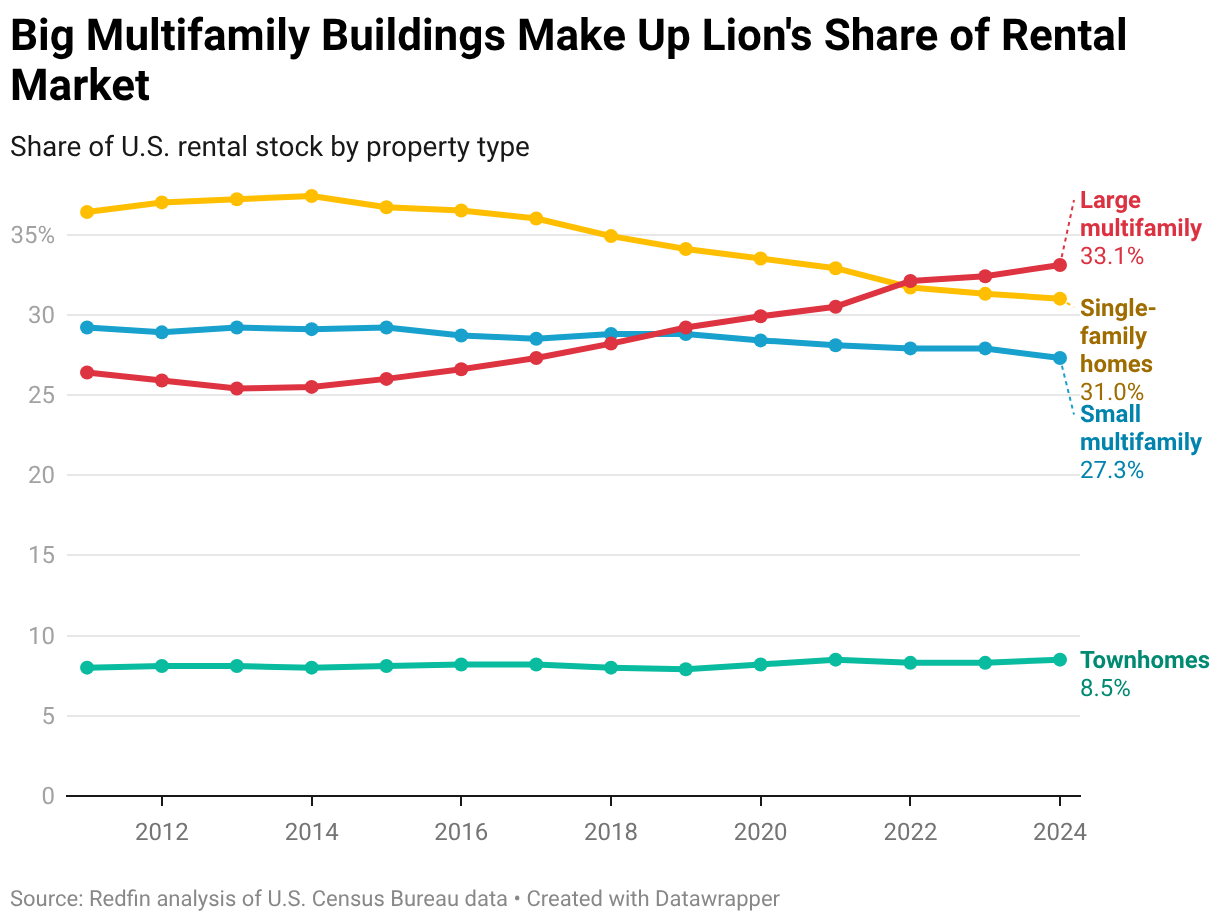
In 2024, only 31% of U.S. rentals were single-family homes — the smallest share on record — while 33.1% were in large multifamily buildings (defined as structures with 20 or more units), marking the first time multifamily rentals outpaced single-family rentals since data tracking began in 2011. Small multifamily buildings (5–19 units) accounted for 27.3% of rentals, and townhomes made up the remaining 8.5%.
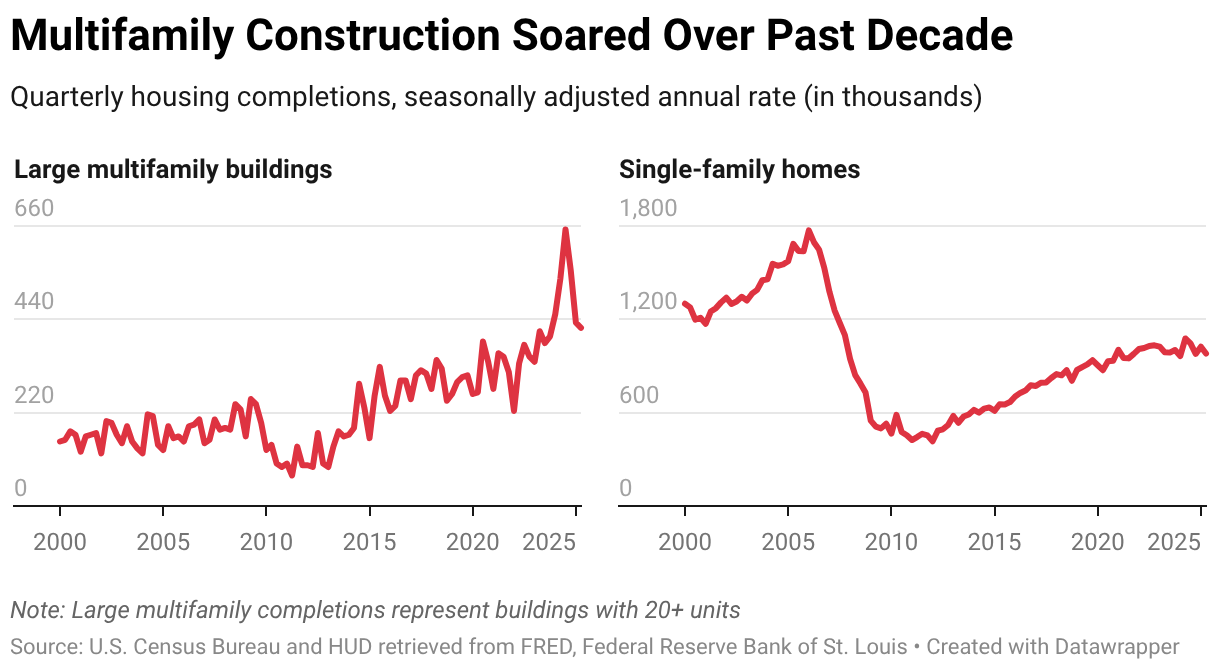
The shift reflects longer-term construction trends. Multifamily housing construction accelerated substantially during the pandemic, partly driven by surging rental demand and historically low interest rates that made large projects more financially viable. These conditions enabled builders to deliver a record number of large apartment units in 2024, increasing supply and giving renters more options and negotiating power, than in recent years.
“Big apartment buildings make up a growing piece of the rental-market pie because America has been building a lot of them, which has made them more affordable for renters,” said Redfin Senior Economist Asad Khan. “Increased supply gives renters more options and more room to negotiate prices. While multifamily construction has slowed recently, there are still more apartments for rent than people who want to rent them, which has kept rent growth at bay.”
By contrast, single-family construction remains below levels seen during the early 2000s housing bubble, and most newly built detached homes are sold to owner-occupiers rather than held as rentals. The pool of existing single-family rentals has also shrunk as low mortgage rates during the pandemic encouraged individual homeowners to buy rather than rent. Many such owners are now reluctant to sell or rent their homes as housing costs and interest rates remain elevated.
As a result, just 13.7% of single-family homes are occupied by renters, the lowest proportion in over a decade, and there are only about 11.3 million single-family rental units nationwide — the third lowest count on record. In contrast, large multifamily buildings now hold roughly 12.1 million rental units.
The transition is most pronounced in dense urban markets: in New York City, nearly 70% of rentals are in large multifamily buildings, while only 4.3% of rentals are single-family homes. Areas with more suburban or lower-density profiles, such as Riverside, California and Nassau County, New York, continue to have higher shares of single-family rentals.