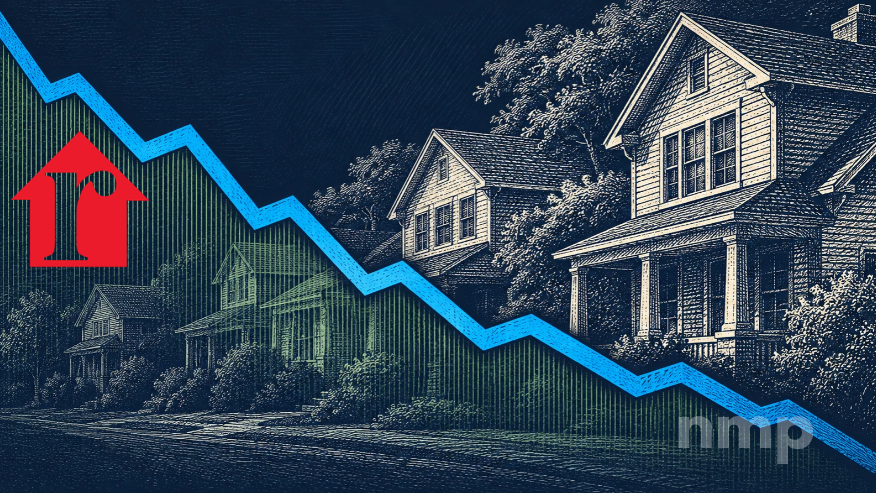
Home contract signings fell 17% year over year in October, reaching their lowest level for the month on record, as higher mortgage rates continued to squeeze buyers out of the purchase market, according to Realtor.com's latest housing report.
The annual decline was the steepest since March 2023 and marked the fourth consecutive month of falling contract signings. September's 9.7% annual decline nearly doubled in October.
The slowdown is also showing up in mortgage demand. Realtor.com reported that purchase mortgage applications were down more than 18% from a year earlier over the preceding two weeks.
Thirty-year mortgage rates averaged 7.33% in October, compared with 7.24% at the end of the month. Realtor.com estimates that changes in mortgage rates alone have reduced buyer purchasing power by 10.4% compared with October 2025.
More Homes, Fewer Contracts
The number of homes under contract fell 10.5% annually, more than double September's 4.1% decline and the steepest drop since October 2023.
Meanwhile, active inventory rose 7.4% year over year to nearly 1.18 million homes, while the median asking price declined 2.2% to $415,000.
Yet sellers have shown little urgency to make deeper price cuts. Just 20.5% of active listings saw reductions in October, barely above the 20.3% share a year earlier.
New listings also declined 7.5%, their steepest annual drop in more than three years, suggesting sellers are becoming increasingly reluctant to enter a slowing market.
Affordability Remains The Obstacle
For LOs, the figures point to a purchase market where growing inventory has done little to offset the impact of higher financing costs.
The latest numbers build on NMP's earlier reporting on declining pending sales across major metropolitan markets, with October bringing a sharper deterioration in new contract activity.
Realtor.com also found that contract cancellations remained relatively stable at 7.8%, compared with 7.5% a year earlier. That suggests the greater problem is buyers not entering contracts in the first place, rather than deals falling apart after signing.