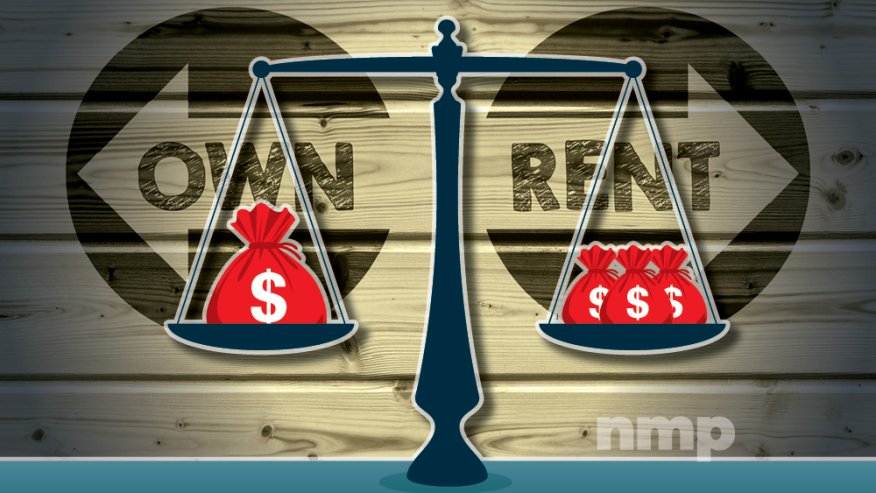
Wanna-be home buyers who earn the nation’s median income will find themselves more than $25,000 short if they intend to purchase the median-priced home.
A new Redfin report says buyers need to earn $111,252 a year to afford a place listed at $426,747, the median. But the median household income at the end of 2025 was just $86,000 — a shortfall of $25,252.
Renters, on the other hand, need just $76,000 to afford the typical rental, about $35,000 less than buyers need to acquire a house.
But while the buy-vs.-rent gap is significant, it is shrinking, Redfin also reports. Indeed, it’s the smallest it’s been in three years. The spread peaked in late 2023 at $120,609 needed to buy versus $72,572 needed to rent.
The difference is shrinking because buying costs have declined on a year-over-year basis while rental costs have risen, the realty firm said.
The current median home-sale price is $426,747, just slightly higher than 2024, but average mortgage rates are sitting around 6.1%, down from nearly 7%. That brings the median monthly mortgage payment down from about $2,800 in 2024 to around $2,675 in 2025.
At the same time, the annual income required to buy a home dropped 4%.
Rental costs, meanwhile, are higher than they were a year ago. The median asking rent nationwide is $1,901, just $15 shy of August’s all-time high and up 2.1% year-over-year. That means the income required to rent is also up 2.1% year-over-year. But with wages rising at a faster rate, 3.7% year-over-year, rental affordability has improved slightly.
While rental costs are still rising on a year-over-year basis, they have started to decline month-over-month, and affordability could “notably improve” if current trends persist, Redfin offered.
The study also found that the buy-v-rent affordability gap is shrinking in every major metro except Detroit. On the other hand, rental affordability is improving in just five of the 50 most populous metros — Austin, Denver, San Antonio, Tampa, and Phoenix.