For the first time in the modern mortgage rate environment, the share of U.S. homeowners with mortgage rates above 6% has overtaken the share holding rates below 3%, according to a recent Realtor.com analysis of Federal Housing Finance Agency (FHFA) data. This development, reported in Q3 of 2025, marks a notable turning point in the long-standing “rate lock-in” era that has constrained housing market mobility since the pandemic.
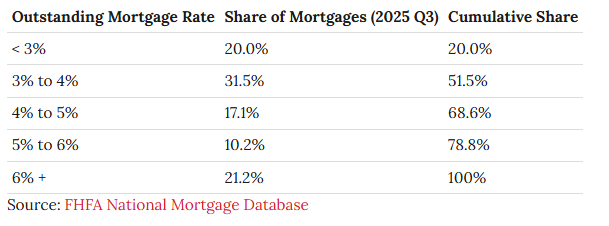
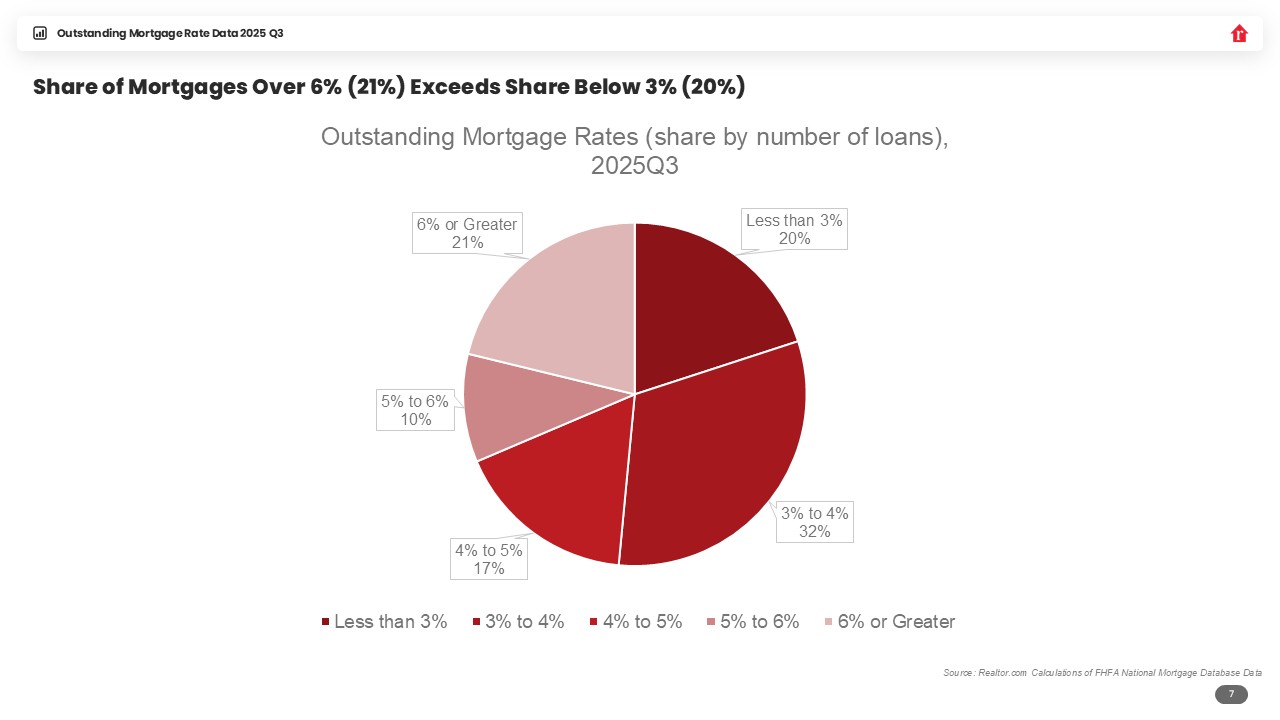
The analysis shows that 21.2% of outstanding U.S. mortgages now carry interest rates at or above 6%, compared with 20% with rates below 3%. Mortgage rates peaked at 7.04% in early 2025 before easing into the low-6% range, but have remained elevated since September 2022.
Despite the crossover, low-rate loans still dominate the market. More than half of outstanding mortgages have rates at or below 4%, and approximately 69% are at 5% or lower. These conditions continue to underpin the rate lock-in effect, as many homeowners remain reluctant to sell and replace favorable financing terms.
Danielle Hale, chief economist at Realtor.com, noted: "This crossover reflects a gradual resetting as some households trade in low-rate mortgages for higher-rate loans or enter the market for the first time, even as rate lock-in continues to limit the pace of inventory recovery."
Improved housing supply conditions over the past year have nudged some markets toward balance, though inventory remains tight in many affordable segments. Economists note that further declines in interest rates would be critical to loosening the lock-in effect more broadly and encouraging greater seller participation.
"Even with rates still elevated, modest mortgage rate decreases into the low-6% range could encourage additional homebuying activity," Hale said. "Further easing in inflation and mortgage rates would be key to unlocking more seller participation, helping to relieve price pressure and competition in an under-supplied market."