Why it pays for LOs to be competitive out of the gate in today’s rate-sensitive market
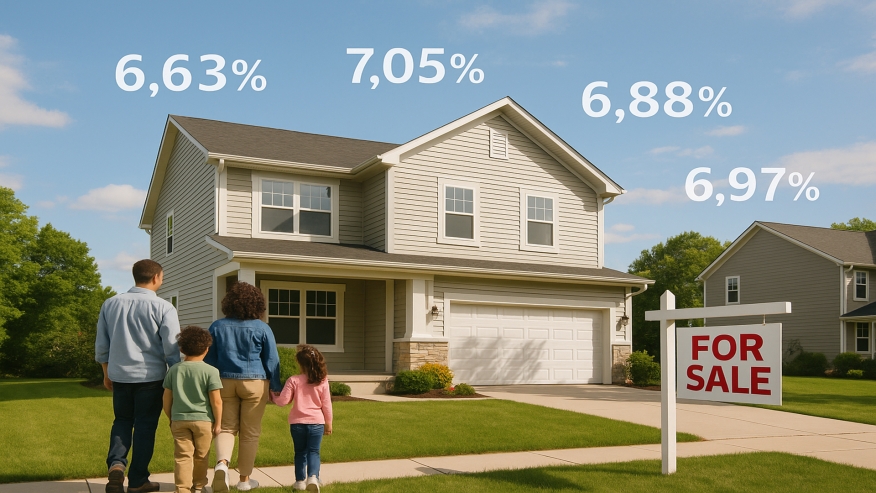
With home prices stubbornly high and interest rates still elevated, today’s homebuyers face a daunting market. But a new analysis from LendingTree suggests this strategy: shop rates.
Matt Schulz
According to LendingTree data from its online loan marketplace, borrowers can save an average of $80,024 over the life of a 30-year fixed-rate mortgage simply by choosing the best available offer. That translates to about $222 a month, or $2,667 a year.
“That’s money that can instead be used toward other financial goals,” stated Matt Schulz, LendingTree’s chief consumer finance analyst. “It’s a big deal.”
The latest analysis marks an increase from a similar analysis last year, when shopping around yielded average lifetime savings of $76,410 — meaning potential savings have grown by more than $3,600.
Where the Biggest Savings Are
As you’d expect, homebuyers in more expensive housing states stand to benefit the most from comparing mortgage offers. The top states for average potential mortgage savings are:
Get the NMP Daily
Essential stories, every weekday.
California: $118,393
Washington: $109,012
Hawaii: $105,473
“The bigger the price of the home, the bigger the savings for shopping around for a lower rate,” Schulz noted.
Even in states with lower home prices, rate shopping can still pay. In Louisiana — the state with the smallest savings — borrowers can save an average of roughly $44,000 and cut monthly payments by $124.
Why It Pays To Shop
The key driver of these savings, according to LendingTree, is wide variation in interest rates offered to borrowers. Nationally, the average gap between the lowest and highest loan annual percentage rates (APRs) is 0.99 percentage points — a significant spread that can add up to tens of thousands of dollars over time.
In 20 states, that spread exceeds 1.00 percentage point. Minnesota has the widest average gap (1.15 points), followed closely by South Dakota (1.14 points).
Schulz underscored that stronger credit profiles help borrowers secure the lowest possible rates. But even for borrowers with good credit, not all lenders offer the same terms.
Put another way, for every $100,000 borrowed, shopping around could save more than $24,000 over 30 years, LendingTree’s analysis found.
Buyers are often looking for competing offers, though not very far, and mortgage rates are certainly top-of-mind. The most recent Mortgage Monitor webinar from Intercontinental Exchange, Inc. (ICE) found:
Two out of three borrowers say they would reuse their last lender, yet less than 25% are actually retained, signaling a potential opportunity for lenders.
More than seven out of 10 — 72% — of borrowers cite interest rate as their top priority, and only 25% say they care about having an existing relationship with a lender.
Most borrowers only consider one or two lenders, so being fast and competitive is a must.
Twelve lenders are now selected for a program that removes a key USDA preclosing approval step
The U.S. Department of Agriculture is doubling the number of lenders in a pilot program designed to speed up rural mortgage closings.Six additional lenders will join USDA's Delegated Authority Lender Interactive Test Environment (LITE) Pilot Program on Dec. 1, bringing the t...
ICE and Auction.com data reveal a growing concentration of recent mortgage vintages in foreclosure activity, with government-backed borrowers facing additional equity pressures
Mortgages originated since 2022 now account for nearly half of completed foreclosure sales, while foreclosure auction activity involving those newer loans has surged 73% over the past year, according to separate reports from Intercontinental Exchange (ICE) and Auction.com.Th...
ICE and Auction.com data reveal a growing concentration of recent mortgage vintages in foreclosure activity, with government-backed borrowers facing additional equity pressures
First American’s September report shows higher-end appreciation leading in most tracked markets, while starter-home prices continue climbing in several Midwest and Northeast metros
DPR’s Q3 report identifies 311 programs without income limits and 1,080 without first-time buyer requirements, though funded availability grew more slowly than the overall count