This is a guest contribution from Reverse Engineering Finance, a reader-supported publication. To receive new posts and support their work, consider becoming a free or paid subscriber.
In stark contrast to the FHA, the VA currently has no effective loss mitigation option for the vast majority of struggling Veterans. But wait what about VASP?
The VA Servicing Purchase (VASP) program provided a lifeline to ~35,000 struggling veterans. I detailed why this program would be so effective in a piece in early April.
Somewhat ironically though, literally the day after I published the piece, the program's cancellation was announced, with May 1 marking the end of the VA's approval of VASP applications.
So while VASP was very effective for those veterans who got in, for those veterans who did not, the vast majority of them basically have no loss mitigation option at present. More on that at the end of the piece.
First, a look at the June numbers for VA loans.
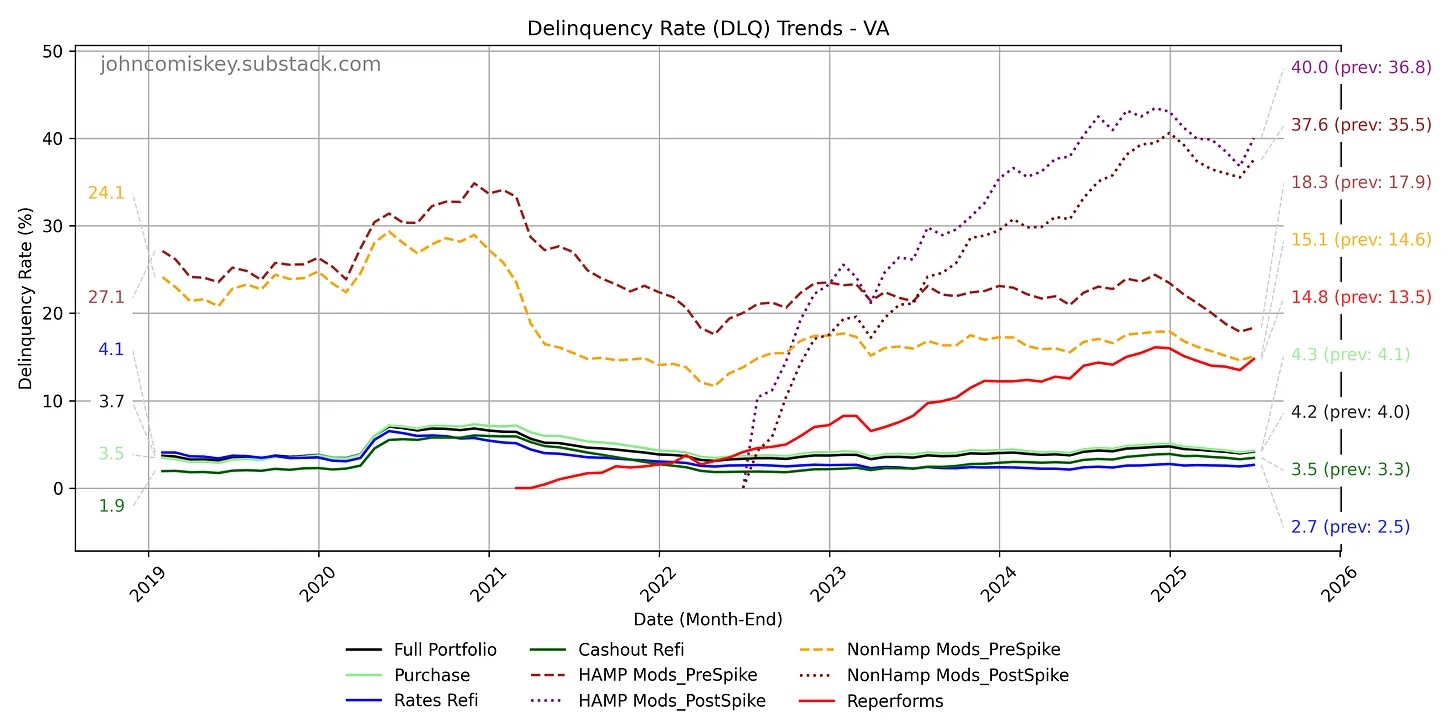
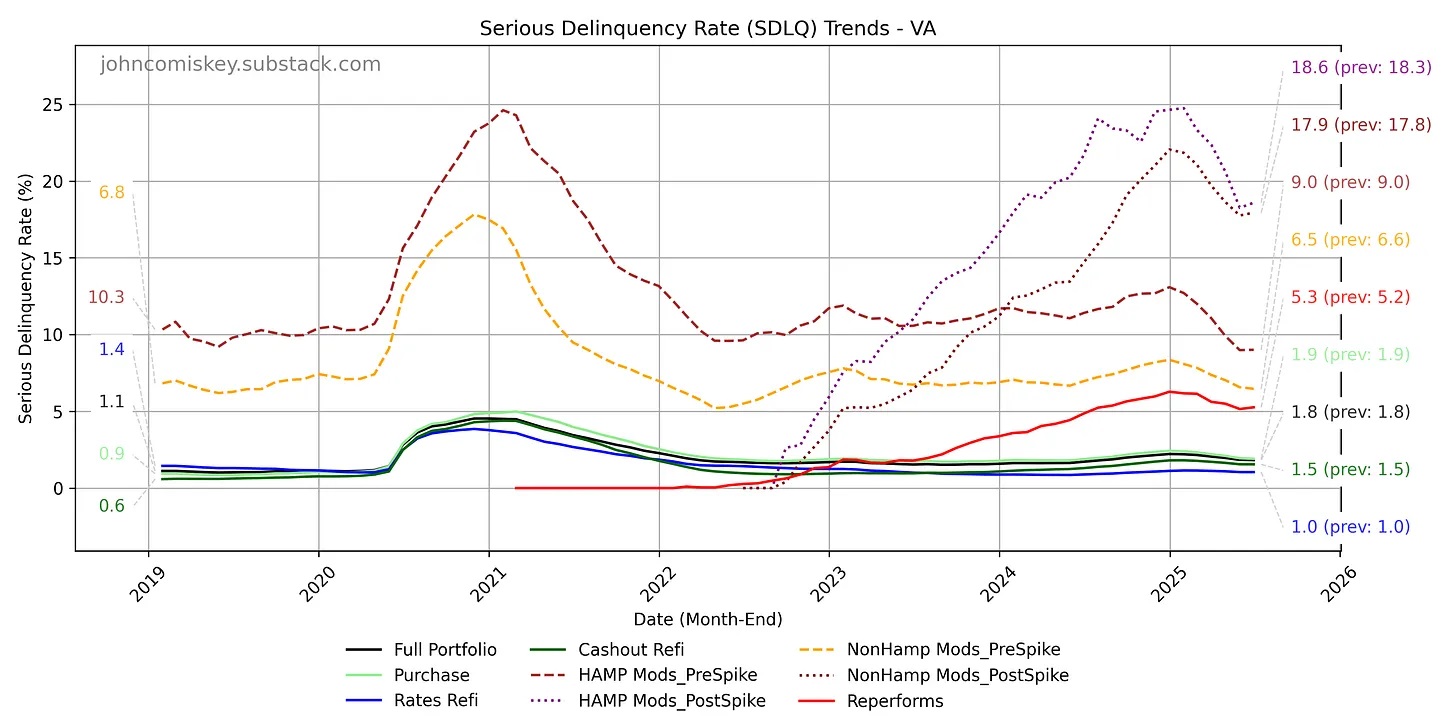
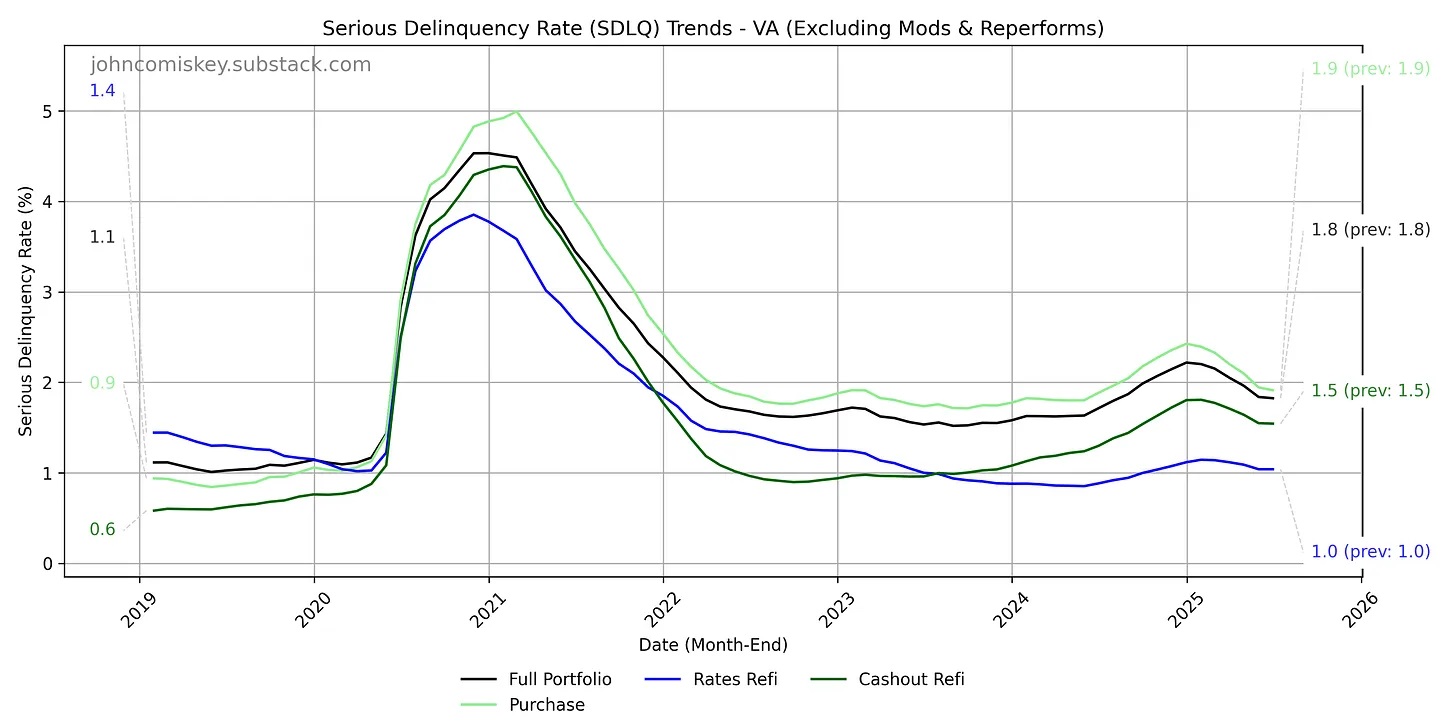
The VA portfolio saw a modest uptick in delinquency rate in June; rising from 3.97% to 4.18%. The serious delinquency rate held close to constant, falling from 1.84% to 1.83%. These are over the 3.66 million VA loans in GNMA_II pools, which is nearly all of the portfolio.
The delinquency rates inside the VA portfolio share some broad characteristics with the FHA's, specifically that the rate on modifications and reperforms is significantly higher than the rest of the portfolio and the delinquency rate on modifications performed post June 2022, when interest rates started to spike, is similarly awful.
The key difference is that the VA portfolio has far fewer of these modifications, totaling only about 33,000 currently in GNMA_II pools vs. about 123,000 of these modifications in the FHA portfolio.
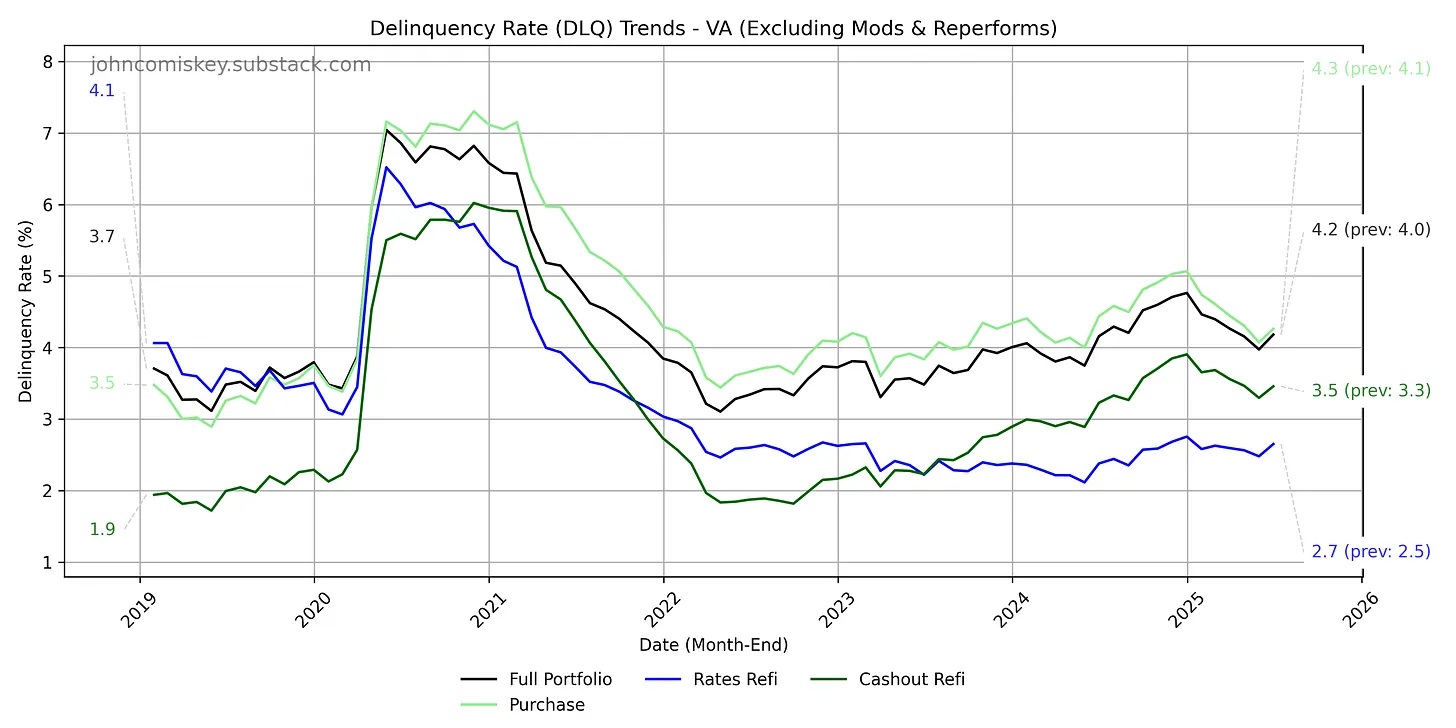
When you zoom in on the vast, vast majority of the VA portfolio, the delinquency trends have been steadily, though pretty slowly, rising since the post-COVID lows and are above the pre-pandemic rates for the portfolio as a whole and for each cohort save the rates refi, which makes sense when you consider how many of those folks refinanced during the pandemic. Something to keep eye on, but not particularly alarming in and of itself.
The real story in the VA data over the past few months has been the uptick in foreclosures and loss mitigation pool removals for VASP.
VA Foreclosures
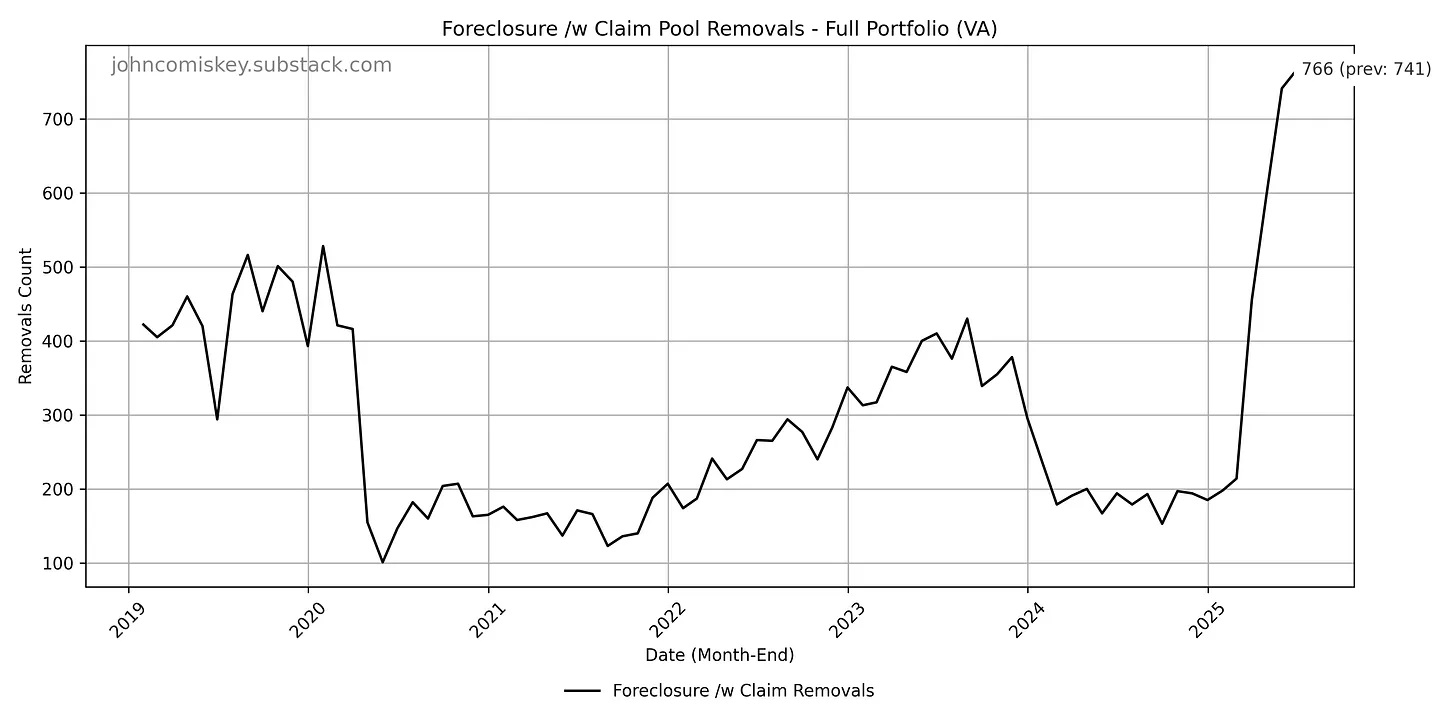
The chart below shows pool removals for foreclosure with claim. In 2019 through the pandemic start, these ranged from 400-500 a month pretty regularly. Then they became essentially non-existent for a while due to COVID moratoriums, started to rise again as those moratoriums expired, and then crashed again in 2024 as the VA issued another moratorium to give time for VASP to be implemented. Once that final moratorium expired at the beginning of this year, a pent-up supply of foreclosures actually started making its way to auction.
These pool removals very likely reflect actual foreclosures, not just foreclosure starts (which have also spiked this year in much greater volume, some of which will go all the way to foreclosure, some of which won't). This chart right now doesn't so much reflect stress in the portfolio vs. pent-up FCs that were prevented from going to auction due to VA policy (or pseudo policy, since the moratorium was more a heavy suggestion not to do it). Many of these foreclosures will be for properties of borrowers who have not been responsive to their servicers over the past few years. They were always going to happen, they just couldn't, really, for the past few years — and now they can, so they are. Expect these FC pool removals to remain at an elevated level for a while yet.
VASP
The biggest story being told in the VA data is VASP. The VA Servicing Purchase program was a VA program to purchase seriously delinquent loans from the holder, after which the VA would modify the loan to a 2.5% interest rate to reduce the payment and cover any arrears, hold it on their book, and service it themselves (through a contractor). This program started in October of last year, ramped up in earnest in the beginning of the year, and was abruptly shut down by the VA (new political appointee leadership) in April, with an end date of May 1 for the VA to approve applications for the program.
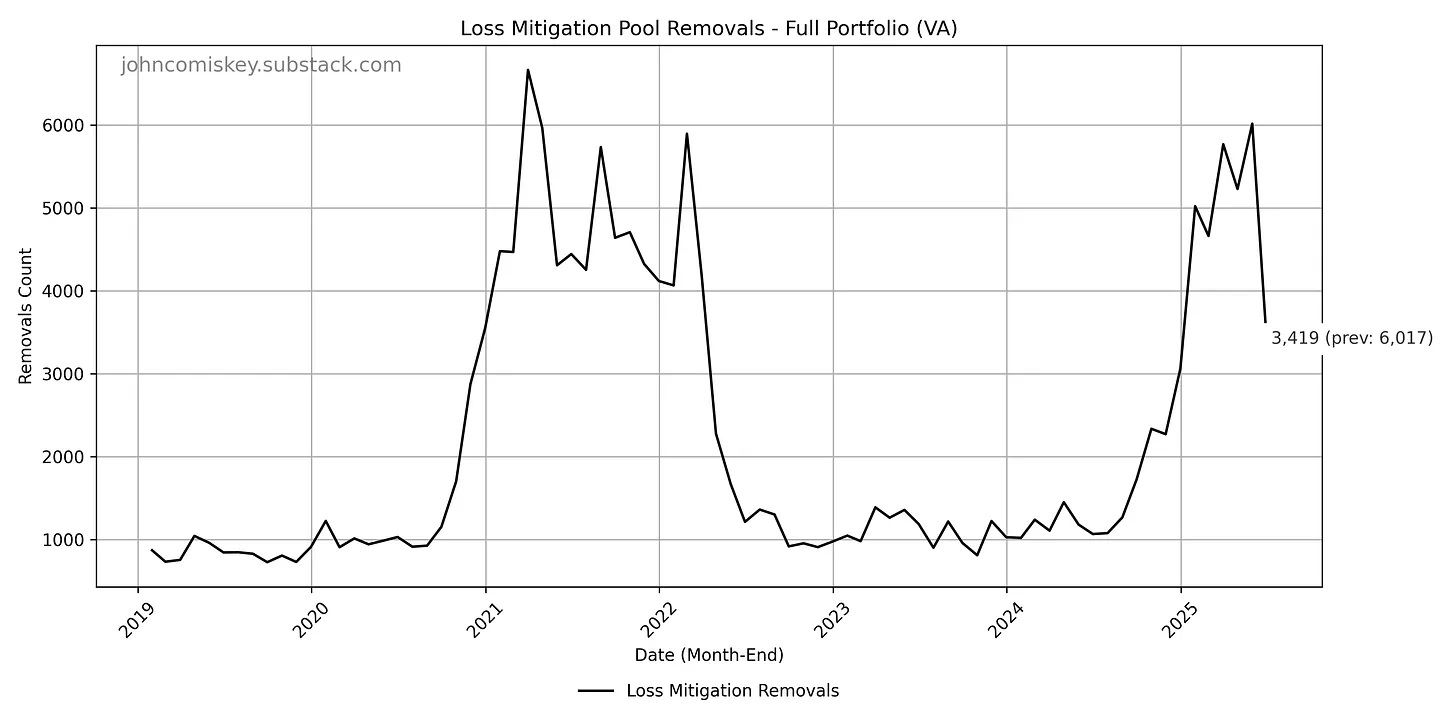
VASP removals show up as pool removals due to loss mitigation. The servicer removes them from the pool as close as possible to transferring the loan to the VA. These lump in with non-VASP loan modifications (e.g., when rates were super low in 2021, loan modifications were a viable way to provide payment relief for struggling borrowers), but it is safe to say that with rates where they are and the very low rate that most VA loans carry, nearly all of the removals since last October or so have been VASP related.
Even though the VA stopped approving VASP applications on May 1, there were still 3,419 loss mit pool removals in June (albeit down from 6,017 in May). The pool removals will usually lag the approval date as the holder/ servicers of the loan will wait to remove them from the pool until right before the VA pays them, and there is a couple month lag of that from VA approval.
Additionally, some of the VASP approvals were subject to the loan completing a 3 month trial payment plan. For those loans that complete the plans, the pool removals should continue for the next couple months — perhaps a few thousand more VASPs to be removed from pools before the servicer impact of that program is over.
How Many Loans Did The VA Purchase Through VASP?
There have been ~34,000 loss mit pool removals on VA loans since last September, though a few of them may have been for traditional modifications and with a few thousand likely yet to hit, something around 35,000 loans looks to be the number when it is all said and done.
This gels with the 33,000 that NPR reported in a story last month that they seem to have sourced from a FOIA request to the VA.
How many VA loans have been left behind?
As of June, there were still 43,162 VA loans that are six months or more delinquent (with another 23,500 between three and five months delinquent). Aside from maybe a few thousand still in VASP trial payment plans, nearly all of these loans have no effective loss mitigation option now that VASP is gone. There is legislation that has passed the U.S. House of Representatives and now the Senate, H.R. 1815, that would create a partial claim program for VA loans that would provide some option to at least cure the arrears on these 43,162 loans. If the VA implements something akin to the FHA’s payment supplemental partial claim with the new authority, there is even the possibility it can offer some payment relief for these veterans.
- [NOTE: See NMP's article, VA Loan Reform Clears Congress, for more on H.R. 1815, which as of 4:15 p.m. ET Thursday afternoon awaits a signature from President Trump.]
Until that happens, however, FC proceedings will likely motor along on these loans, and starts will continue along for borrowers falling into serious delinquency, since there are effectively no loss-mitigation options for most struggling veteran borrowers given the rate environment.
Subscribe to the Reverse Engineering Finance