America has no shortage of vacant homes — but that doesn't mean buyers have more homes to choose from.
A new LendingTree analysis found roughly 14.5 million U.S. homes, or about one in 10 housing units, are vacant. Yet only a small fraction of those properties are available to purchase. Of all vacant homes nationwide, fewer than 800,000 are listed for sale, while 4.7 million are used seasonally or recreationally and another 2.6 million are available for rent.
The findings help explain one of the biggest contradictions in today's housing market: headlines about millions of empty homes exist alongside continued reports of limited inventory and affordability challenges.
"Housing can feel scarce even when millions of homes sit empty," the report notes, because vacancy doesn't necessarily mean availability. Many vacant homes are vacation properties, homes reserved for seasonal use, or properties temporarily off the market.
LendingTree analyzed data from the U.S. Census Bureau's 2024 American Community Survey to examine vacancy rates across the country and the reasons homes remain unoccupied. Nationally, vacant homes represent 10.1% of the housing stock.
Mortgage professionals will find the distinction particularly relevant when discussing today's market with borrowers. Consumers often question why housing remains so competitive despite reports of millions of vacant homes. The data suggests the answer lies not in the number of empty properties, but in how few are actually available for purchase.
"A healthy level of vacancy is generally a good thing because it gives buyers and renters more options and helps reduce competition for available homes," said Matt Schulz, LendingTree's chief consumer finance analyst. "However, as our report shows, not all vacant homes are available to people looking for housing. A key question isn't how many homes are vacant, but how many are available for someone to buy or rent."
The composition of vacant housing varies significantly by state.
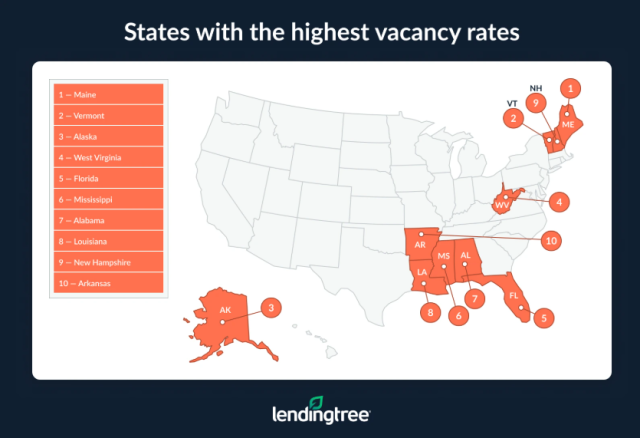
Maine posted the nation's highest vacancy rate at 20.6%, followed by Vermont (19.4%) and Alaska (17.6%), largely because of their concentrations of seasonal and recreational homes. Connecticut recorded the country's lowest vacancy rate at 7.0%, followed by Washington at 7.3%, with California, New Jersey and Oregon tied at 7.5%.
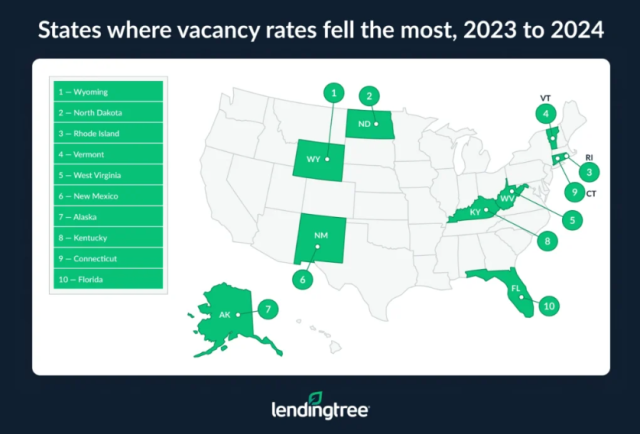
The report also found vacancy rates continue to trend downward nationwide. The national vacancy rate declined from 10.4% in 2023 to 10.1% in 2024, representing roughly 302,000 fewer vacant homes. According to LendingTree, vacancy rates have generally fallen over the past decade as housing supply has struggled to keep pace with demand.
Lower vacancy rates also tend to coincide with higher home values. The states with the lowest vacancy rates have an average median home value of $435,118 — about $167,700 higher than the average among the states with the highest vacancy rates, according to the analysis.
For loan originators, the report offers useful context for conversations with frustrated homebuyers.
Borrowers frequently see headlines suggesting millions of homes sit vacant and assume those properties represent untapped inventory. In reality, the vast majority are not part of the active for-sale market. Vacation homes, seasonal residences, rental units, and properties temporarily held off the market do little to increase the supply of homes available to purchase.
That distinction reinforces a theme that has emerged across recent housing market reports: while inventory has improved from pandemic-era lows, the supply of homes available for sale remains constrained in many markets. As a result, affordability continues to depend not only on mortgage rates but also on whether enough homes come to market to meet buyer demand.