California Housing Affordability Improves In Q4 – NMP Skip to main content

California Housing Affordability Improves In Q4

Feb 18, 2026
California Housing Affordability Improves
Managing Editor

Affordability in the Golden State edged higher in late 2025, as modest home price declines and easing mortgage rates improved buying power, though most households still remain priced out

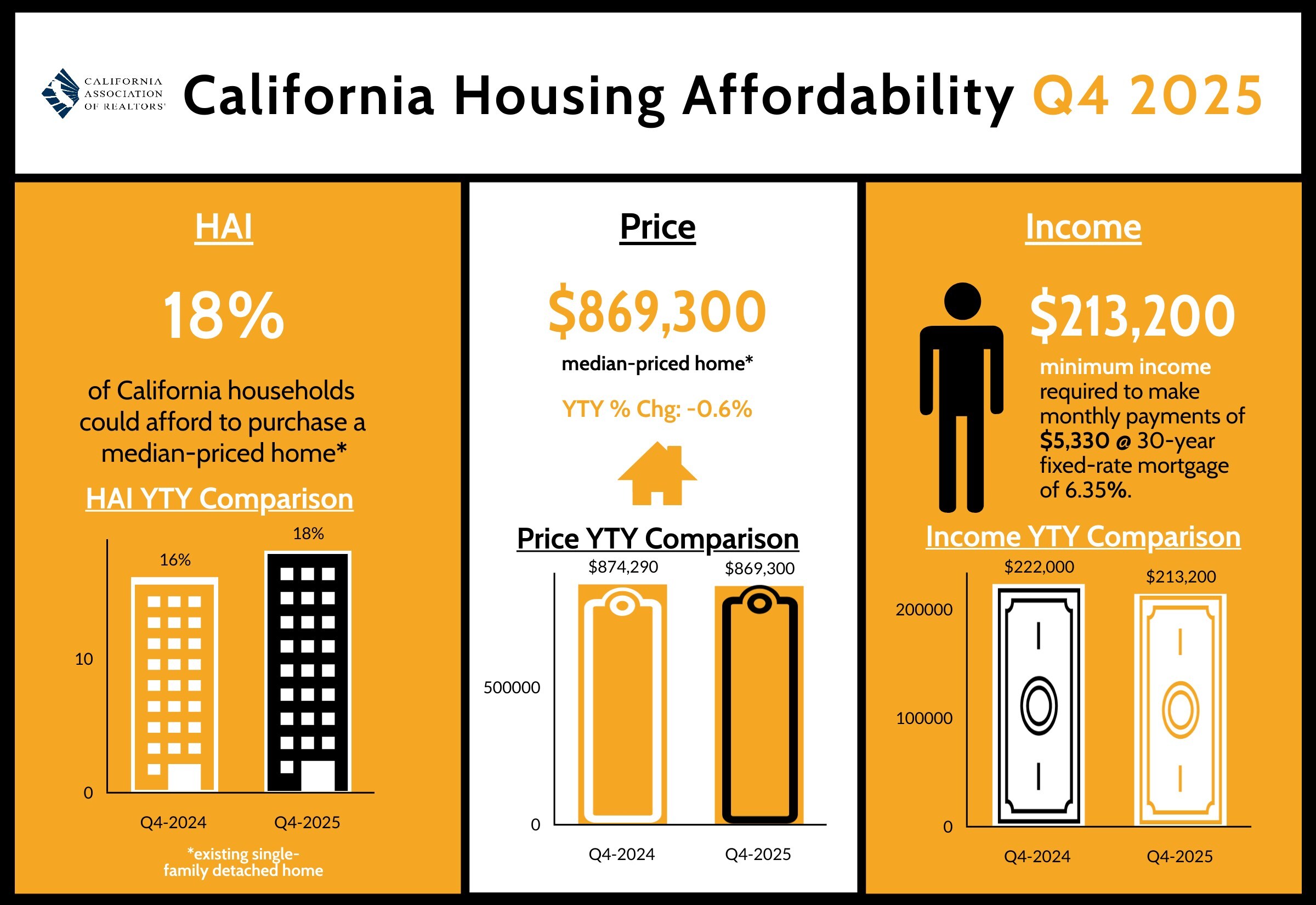
Housing affordability in California improved modestly in the fourth quarter of 2025, compared to both the previous quarter and a year earlier, offering some relief to prospective buyers following a prolonged stretch of worsening conditions, according to new data from California Association of Realtors (CAR).

The organization’s Traditional Housing Affordability Index showed that 15% of California households could afford to purchase the state’s median-priced single-family home in the fourth quarter, up from 14% in the third quarter and 14% in the fourth quarter of 2024. While the increase was slight, it marked a step in the right direction after affordability reached near-historic lows amid elevated mortgage rates and home prices.


Housing affordability in California improved modestly in the fourth quarter of 2025, compared to both the previous quarter and a year earlier


The median price of an existing single-family home in California declined on both a quarterly and annual basis, helping improve affordability. At the same time, mortgage rates eased modestly from recent peaks, reducing borrowing costs for homebuyers and contributing to improved purchasing power.

Despite the improvement, affordability remains significantly constrained by historical standards. CAR noted that the minimum annual income required to qualify for the purchase of a median-priced home remained well above six figures, underscoring the continued financial barriers facing many households in the state.

Regional variations were also evident, as more affordable inland areas offered relatively better access to homeownership compared to high-cost coastal markets, where elevated home prices continue to limit affordability for most buyers. Still, affordability gains were seen across multiple regions as price moderation and slightly improved financing conditions took effect.

CAR officials emphasized that while the latest data signals progress, broader affordability challenges persist. Limited housing supply, elevated home prices relative to incomes, and still-high mortgage rates continue to restrict access for many first-time buyers.

About the author
Managing Editor
NMP Managing Editor Eric C. Peck has 25-plus years’ experience covering the mortgage industry. He graduated from the New York Institute of Technology, where he received his B.A. in Communication Arts/Media. After graduating, he…
Published
Feb 18, 2026
Higher Mortgage Rates Shrink Purchase Demand, Expand Buyer Leverage

Pending sales fell to their lowest level since early April, but lower asking prices and reduced competition give originators more options to structure deals for qualified borrowers

Jul 31, 2026
Even Stable Public-Service Careers No Longer Guarantee Homeownership

Younger teachers, health care workers, first responders, and military households can afford median-priced homes in only a fraction of major metros

Jul 31, 2026
Buyers Gain Negotiating Power In 41 Major Housing Markets

Price cuts and longer listing times are creating opportunities for loan officers to help borrowers negotiate seller concessions, but leverage varies sharply by metro

Jul 30, 2026
Fannie Mae Purchase Volume Jumps 33% In Second Quarter

The GSE financed 201,000 home purchases, while appraisal alternatives pushed estimated borrower closing-cost savings to $3 billion

Jul 29, 2026
Second-Home Lending Grows Faster Than Primary-Home Market

Vacation-home mortgages rose 4.1% in 2025, led overwhelmingly by affluent borrowers

Jul 28, 2026
Credit Score Battle Picks Up Speed With FICO, VantageScore Gains

FICO 10T enrollment tops 70 lenders while VantageScore 4.0’s presence in TransUnion mortgage credit pulls jumps from less than 5% to roughly 30%

Jul 28, 2026