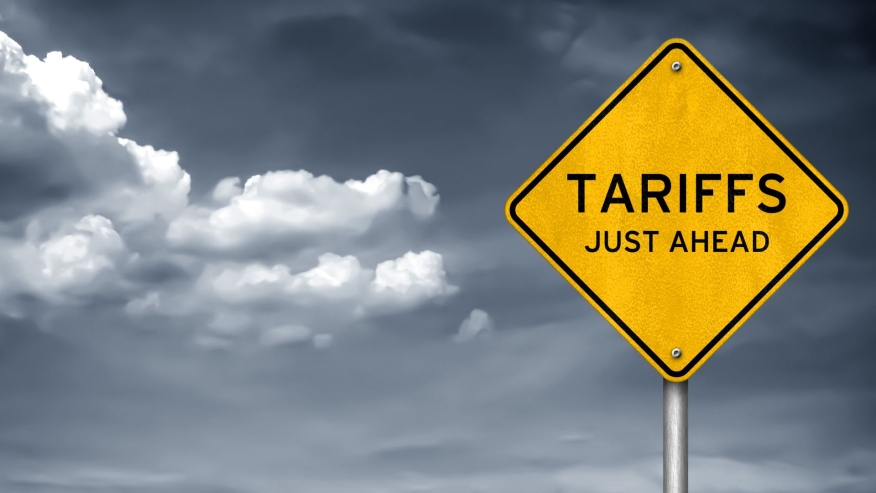
President Trump announced plans to impose 25% tariffs on Canadian and Mexican goods last Friday, including lumber and other materials crucial for homebuilding.
The National Association of Home Builders (NAHB) aired its concerns over affordability challenges by urging the president to exempt building materials from the proposed tariffs due to their harmful effect on housing affordability.
The 25% tariff on softwood lumber products from Canada is additional to the existing 14.5% duty rate, meaning that the overall effective Canadian lumber tariffs will rise to nearly 40%, NAHB reports.
In response to the added tariffs, NAHB Chairman Carl Harris issued a statement, reminding President Trump of the executive order he issued on his first day in office, directing departments and agencies to deliver emergency price relief to lower the cost of housing and increase housing supply.
Harris had commended President Trump for his stated commitment to alleviating housing affordability challenges after that initial executive order. Today, Harris shared his disappointment regarding the president’s tariff actions in the following statement:
“This move to raise tariffs by 25% on Canadian and Mexican goods will have the opposite effect” on housing affordability, Harris stated in an NAHB news release. “More than 70% of the imports of two essential materials that home builders rely on — softwood lumber and gypsum (used for drywall) — come from Canada and Mexico, respectively.”
The cost of to construct new homes remains relatively high compared to pre-pandemic levels. Now, consumers can expect to face even greater price hikes on new homes with the added tariffs on lumber and building materials, according to NAHB, which would slow the rate of home building even further.
“Tariffs on lumber and other building materials increase the cost of construction and discourage new development, and consumers end up paying for the tariffs in the form of higher home prices,” Harris continued.
Prior to the president’s announcement on 25% tariffs, January 31, NAHB sent a letter to administration officials seeking a building materials exemption on the tariffs because of their harmful effect on housing affordability.
Since 2021, residential construction has seen price increases of just over 30%, NAHB’s letter noted.
“While home building is inherently domestic, builders rely on components produced abroad, with Canada and Mexico representing nearly 25% of building materials imports,” Harris stated in NAHB’s letter. “Imposing additional tariffs on these imports will lead to higher material costs, which will ultimately be passed on to home buyers in the form of increased housing prices.”
The letter from NAHB also mentions that supply chain disruptions could also hinder rebuilding efforts in areas affected by natural disasters, hinting towards the recent wildfire outbreaks in Southern California that worsened the state's home insurance crisis. Previously, the administration had pledged to help rebuild those areas as quickly as possible.
However, in the letter NAHB assures that it will continue to sound the alarm to the administration on the “detrimental effects that tariffs on building materials have on housing affordability and continue to seek a tariff exemption for building materials. And we will actively engage with policymakers to reduce regulatory burdens and eliminate other obstacles that are preventing builders from constructing more attainable and affordable housing."