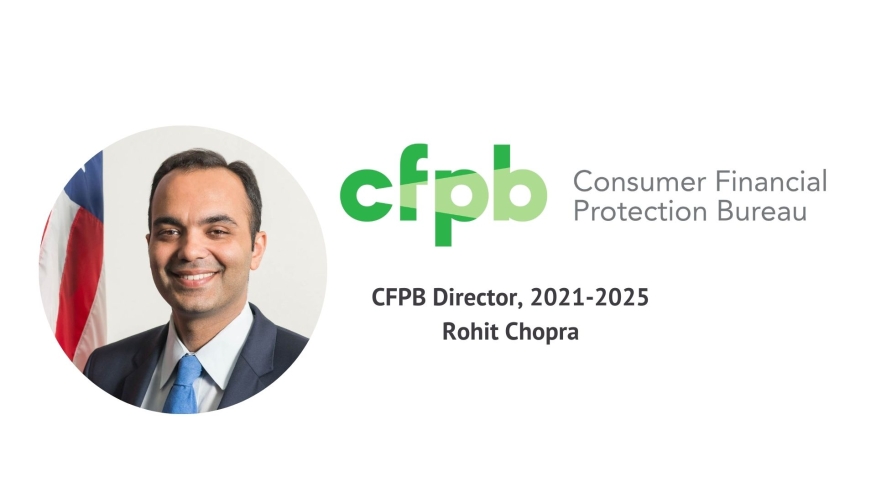
President Donald Trump has dismissed Rohit Chopra as director of the Consumer Financial Protection Bureau (CFPB) in his latest purge of officials appointed under the Biden administration.
Chopra shared news of his departure on X, February 1, in a post including pictures of his letter that express gratitude and acknowledge those who “shared their ideas and experiences” with the agency.
“You helped us hold powerful companies & their executives accountable for breaking the law, and you made our work better,” Chopra wrote on X.
Chopra was appointed by the former President Joe Biden to lead the bureau in 2021. The position has a five-year term, but the Supreme Court ruled in 2020 that the president can fire the director at will.
Chopra also stated in his letter that the CFPB was prepared to work with the Trump administration. He noted that the agency had drafted rules to prevent Russia, China, and other foreign entities from using data brokers to surveil Americans and proposed policies to protect individuals from losing access to banking services due to their political or religious views. The CFPB also analyzed Trump’s campaign proposal to cap credit card interest rates.
Although Chopra was appointed to a five-year term and could have remained in his position, he had previously stated he would step down if asked by the new president.
Still, the move may have been widely expected as Republicans have historically criticized the agency's alleged overreach, believing it wields too much unchecked power.
Likewise, some professionals in the mortgage industry have opposed the agency's increased oversight under Chopra's tenure, which involved a number of lawsuits against major banks and nonbanks within the financial industries.
During Chopra’s tenure under the Biden administration, the CFPB removed medical debt from credit reports and imposed limits on overdraft penalties, aiming to create a fairer and more competitive financial system for consumers. However, many in the financial industry criticized his approach as excessive regulatory intervention.
Since 2021, the consumer watchdog agency has carried out a campaign to combat redlining and race-based discriminatory lending in the mortgage industry. A number of major banks and nonbanks have been sued by the CFPB, including Townstone Financial, which settled its case concerning redlining African American neighborhoods in Chicacgo last November.
The CFPB also monitors compliance heavily, most recently by targeting Rocket Homes in a lawsuit alleging the lender and its broker partner engaged in illegal kickbacks and the steering of mortgage borrowers to Rocket Mortgage. However, the Detroit-based lender stated that the claims were ‘false and a distortion of reality.’
Another recent example from this year, the CFPB alleged that the manufactured-home lender, Vanderbilt Mortgage, violated TILA and Regulation Z by ignoring “obvious red flags about borrowers' ability to repay.”
Additionally, worries of a potential systemic mortgage servicing crisis did rear its head in 2022 after the failures of both Silicon Valley Bank and Signature Bank. However, Chopra also served on the board of directors for the Federal Deposit Insurance Corp. (FDIC), which took over both banks after they failed.
Last year, the Supreme Court upheld the CFPB’s funding structure, rejecting a challenge that could have weakened the agency. Unlike most federal agencies, the CFPB is funded directly by the Federal Reserve rather than through the congressional budget process.
No replacement for CFPB Director has been named yet. In the meantime, Zixta Martinez, the CFPB's deputy director, will take over, according to the agency's governing structure.