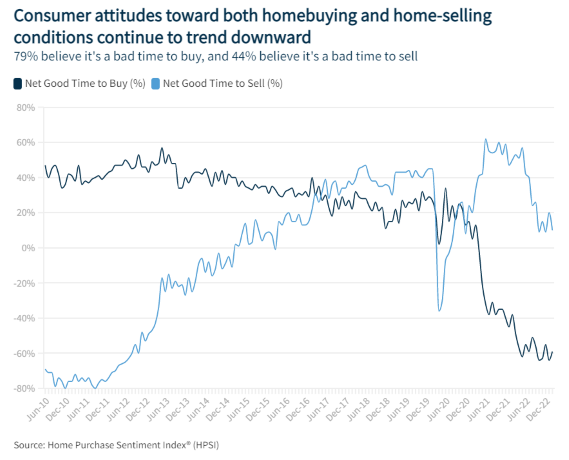
Confidence in home buying is dipping closer to its all-time low after three consecutive monthly increases.
That’s according to Fannie Mae’s Home Purchase Sentiment Index which decreased 3.6 points in February. Job security and home-selling conditions decreased in the month-over-month survey by the government sponsored entity.
In February, 44% of consumers reported that it’s a bad time to sell a home, up from 39% in January and 24% expressed concern about losing their job in the next 12 months, up from 18% in January.
Year over year, the full index is down 17.3 points.
"The HPSI declined this month and is now just slightly above the survey low set late last year," said Doug Duncan, Fannie Mae senior vice president and chief economist. "The decline was partly driven by a substantial decrease in consumers' sense of home-selling conditions, with most respondents who indicated it's a 'bad time to sell' citing unfavorable economic conditions and mortgage rates as the primary reasons for that belief.”
Home-selling sentiment is now lower than it was pre-pandemic, while homebuying sentiment remains near its all-time low.
“We believe these results corroborate our expectation for subdued home sales in the coming quarters, particularly now that mortgage rates have begun rising again,” Duncan said. “Additionally, this month's survey indicated an increase in job security concerns, which we'll continue to monitor closely, since labor market uncertainty could play yet another factor in slowing housing activity."
Component Highlights
- Good/Bad Time to Buy: The percentage of respondents who say it is a good time to buy a home increased from 17% to 20%, while the percentage who say it is a bad time to buy decreased from 82% to 79%. As a result, the net share of those who say it is a good time to buy increased 5 percentage points month over month.
- Home Price Expectations: The percentage of respondents who say home prices will go up in the next 12 months decreased from 32% to 30%, while the percentage who say home prices will go down decreased from 37% to 35%. The share who think home prices will stay the same increased from 30% to 33%. As a result, the net share of those who say home prices will go up increased 1 percentage point month over month.
- Mortgage Rate Expectations: The percentage of respondents who say mortgage rates will go down in the next 12 months increased from 13% to 15%, while the percentage who expect mortgage rates to go up increased from 52% to 55%. The share who think mortgage rates will stay the same decreased from 33% to 28%. As a result, the net share of those who say mortgage rates will go down over the next 12 months decreased 1 percentage point month over month.
- Job Loss Concern: The percentage of respondents who say they are not concerned about losing their job in the next 12 months decreased from 82% to 73%, while the percentage who say they are concerned increased from 18% to 24%. As a result, the net share of those who say they are not concerned about losing their job decreased 15 percentage points month over month.
- Household Income: The percentage of respondents who say their household income is significantly higher than it was 12 months ago remained unchanged at 22%, while the percentage who say their household income is significantly lower increased from 10% to 12%. The percentage who say their household income is about the same decreased from 67% to 63%. As a result, the net share of those who say their household income is significantly higher than it was 12 months ago decreased 1 percentage point month over month.