
She Doesn’t Need A Co-Signer Anymore – NMP Skip to main content

She Doesn’t Need A Co-Signer Anymore

Single women are now buying more homes than single men

By Tai Pherribo Christensen,
Special To Mortgage Women Magazine

There is a quiet revolution happening in the American housing market, and almost nobody is giving it the attention it deserves. Leading the charge is a single woman who walks through the front door of her own home, kicks off her heels, and dances to the radio while making dinner. She stopped waiting to be saved. She saved herself.

Single women made up a quarter of all first-time buyers in 2025. This is no footnote or a niche segment. One quarter. Since NAR first began tracking homebuyer demographics in 1981, single women have held the position of second largest homebuying demographic, trailing only married couples. But today, single women buy two and a half times as many homes as single men.

Is this a trend? No. It’s a major market shift. And if you are a loan officer who is not actively building relationships with this demographic, you are leaving significant volume on the table.

Who She Is And What She Is Carrying

It was not until 1974 that women were legally allowed to obtain a mortgage without a co-signer in the United States. Let that marinate for a moment. The women buying homes today — building wealth, raising children, choosing stability over uncertainty — are doing so within living memory of a system that required a man’s signature to let them turn the key.

She stopped waiting to be saved. She saved herself.

Racial inequities add another significant layer. Ten-year averages show that white women account for 84% of single female homebuyer purchases, compared to 7% for Black women, 6% for Hispanic and Latina women, and 3% for Asian and Pacific Islander women. The overall growth story is real, however, it is not reaching every woman equally, and that gap deserves its own honest conversation.

Looking at data from 2007 to today, single women first-time homebuyers are now reporting higher incomes than their single male counterparts for the first time. Women now own more homes than men in 31 major U.S. metropolitan areas. Single women are more likely than single men to cut non-essential spending, cancel vacations, and take on extra work to save for a down payment. They are not waiting to be invited into homeownership. They are sacrificing to get there. 

The LGBTQ+ Homeownership Gap — A Market Hiding in Plain Sight

At the same time single women are reshaping the homeownership landscape, there’s another reality the mortgage industry can no longer afford to overlook: LGBTQ+ Americans remain dramatically underserved, with homeownership rates trailing their straight, cisgender peers by nearly 20 percentage points. Behind that gap are real people — individuals and families who have too often been excluded from conversations about stability, wealth-building, and what “home” is supposed to mean. For transgender individuals specifically, that number sits at just 48%, compared to 71% for straight, cisgender people.

The LGBTQ+ population brings more than $1.4 trillion in spending power to the table. This is a growing, financially capable segment of the population that is being locked out of homeownership at disproportionate rates. And not because of lack of desire or financial capability, but because of compounding barriers that our industry has been slow to address.

A borrower who does not feel safe walking through your door is a borrower who does not walk through your door.

Research from Iowa State University found that mortgage loan approval rates for same-sex couples were 3–8% lower than for heterosexual couples. And when approved, they paid more in interest and financing fees, despite evidence that their loans actually perform better. Meanwhile, 67% of LGBTQ+ people surveyed have hidden, considered hiding, or were pressured to hide their identity while navigating the housing market, not by preference, but out of fear of what being visible might cost them.

That fear has a direct impact on origination volume. A borrower who does not feel safe walking through your door is a borrower who does not walk through your door.

What This Means For Our Industry

I have spent more than two decades working to expand access to homeownership for communities that have historically been excluded from the conversation. What the data on single women and LGBTQ+ homebuyers tells me is that the market opportunity is enormous and that the barriers standing between these borrowers and a closed loan are not primarily financial. They are structural, cultural, and in some cases, they are being actively reinforced by policy.

What both groups need from this industry is not charity, but clear communication.

Single women are already showing up. They are making sacrifices, doing the work, and closing loans. The LGBTQ+ community has the spending power, the desire, and in many cases the credit profile to do the same. What both groups need from this industry is not charity, but clear communication. Culturally competent outreach, products designed for the realities of single-income households, and loan officers who understand that the fastest-growing segments of the homebuying market do not always look like the buyers we were trained to serve.

The mortgage industry is navigating real headwinds right now. Every qualified borrower matters. The question is whether we are paying attention to where those borrowers actually are or are we still waiting for them to find us.

She is not waiting. She never was.

This article originally appeared in Mortgage Women Magazine, on the week of August 5, 2026.
About the author
Founder and President
Tai Christensen is the founder and president of Origin & Oak Creative.
Published on
Aug 05, 2026
MORTGAGE WOMEN
Opening Communication

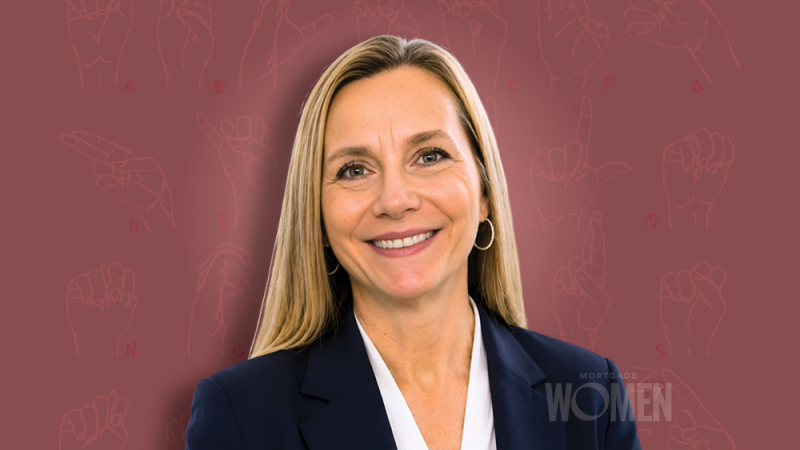
Margie Hennessey strives to make homeownership more accessible to the deaf community through direct communication via ASL

Sloan Brewster
MORTGAGE WOMEN
Women Of Tech 2026: Code That Closes

The innovators behind the tech making loans faster, smoother, and more accessible

Mortgage Women Magazine
MORTGAGE WOMEN
Beyond Barriers

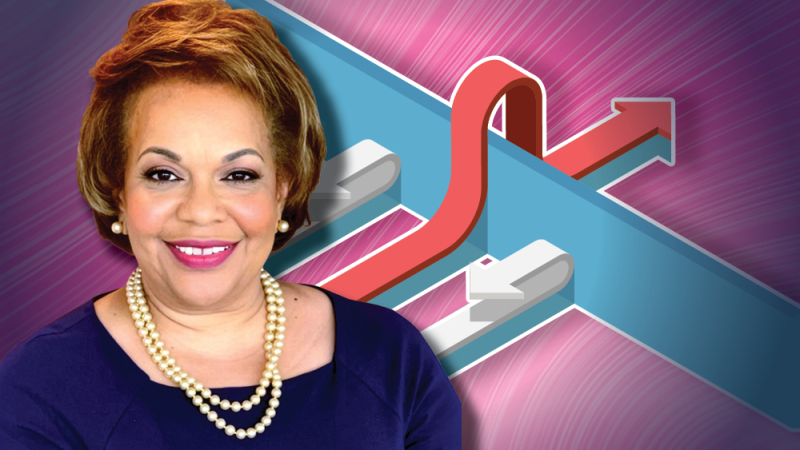
Sandra Thompson on reading it, leading it, and embracing the fact that perfection is never the requirement

Jennifer McGuinness-Lubbert
MORTGAGE WOMEN
2026 Northeast Women In Banking & Finance

Two women setting the standard for leadership, innovation, and impact in banking and mortgage
Mortgage Women Magazine
MORTGAGE WOMEN
A Long And Winding Road To Mortgage

The unexpected turns that led Mae Mackey to the industry

Sloan Brewster
MORTGAGE WOMEN
Grounded, Connected, And Ready For What’s Next

How connection, mentorship, and shared leadership are setting the tone for the year ahead

Kelly Hendricks

Webinars

NMP Ignite: Running A Lean, Mean, Mortgage Machine

In this NMP Ignite session, top originators take the Originator Hot Seat to answer direct questions on how mor...

Webinar
Jun 23, 2026
Investor Confidence in Today’s Non-QM And Why Originators Are Paying Attention... A Virtual Town Hall

We host Angel Oak Mortgage Solutions for a special 2021 edition of their virtual town hall series they ran fro...

Webinar
Apr 08, 2021
How to Help Real Estate Pros in a Post-Refi World

Hear from Melissa Merriman, REALTOR® with The Melissa Merriman Team at Keller Williams, on what real estate pr...

Webinar
Mar 18, 2021
Connect with your local mortgage community.

Meet your your colleagues, both national and local, by attending an event in your area.