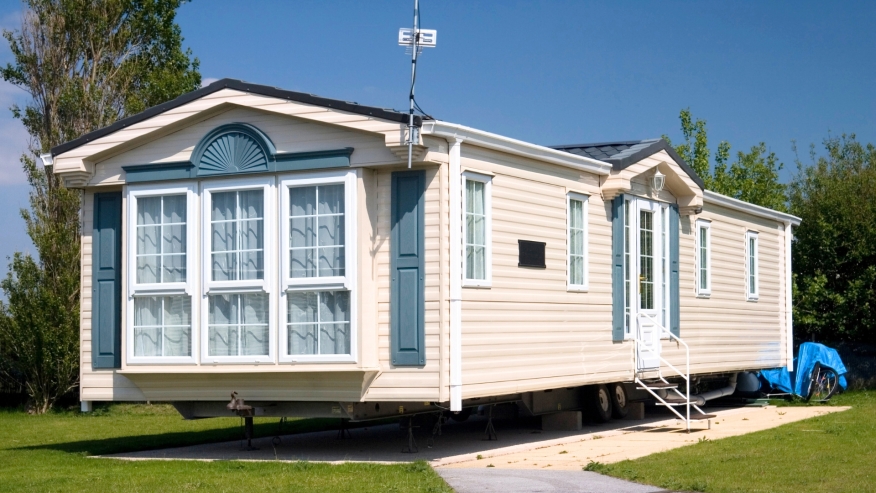
Fannie Mae is opening up its Manufactured Home Advantage program to single-wide factory-built houses.
The expansion is meant to increase the supply of affordable houses, the GSE noted in its seller-servicing update. Factory-made houses are often the least expensive homes on the market, and single-wides are the least expensive of all manufactured houses.
People who reside in these houses are “seeing median monthly housing costs about 40% less” than site-built homes, according to Fannie Mae.
According to the Manufactured Housing Institute (MHI), new factory-built houses cost less than a third of that of those put together on their building sites. The average cost of a site-built home is $409,872, or $166 per square foot, whereas the average cost of a manufactured home is $124,300, or $87 per square foot.
The typical charge for a single-section house is $84,800, or $154,100 for one with more than one section.
In many cases, factory houses are financed as personal as opposed to real property. About 76% of all new manufactured homes are titled as personal property or “chattel.”
But Fannie offers less expensive conventional financing options. Moreover, the company’s standard loan requires just 5% down, while MH Advantage calls for only a 3% downpayment.
The standard option is for traditional single- and multi-wides, while the Advantage program is for multi-width houses with features similar to site-built homes. Those include a certain roof pitch, dormers, and covered porches or garages, one of three energy standards, permanent foundations, drywall throughout, and solid wood or veneer kitchen cabinets.
Homes built by all manufacturers are eligible for standard loans, but only certain makers are eligible for the Advantage option. In all cases, though, the houses must be titled as real property, a process that varies from state to state.
In his keynote address in July at MHI’s annual meeting, Sec. Scott Turner of the U.S. Department of Housing and Urban Development said manufactured housing will be a priority for HUD. “Every community needs housing, and manufactured housing plays a huge role in that,” Turner said.
MHI estimates there are 4.3 million manufactured home sites nationwide. But roughly 55% of all units are placed in a community with other factory houses. The U.S. has about 44,000 manufactured home communities, approximately 18% of which were constructed prior to 1970.
Some 20.6 million people live in a manufactured home, sometimes called a mobile home. Manufactured homes make up 9.3% of annual housing starts.
A 2022 study found that 85% of residents are satisfied with their mobile or manufactured home, a 7% increase from the last survey conducted in 2018. Seven out of 10 cited affordability as the key driver for choosing a factory-made house.
MHI counts 38 manufacturers who operate 152 plants across the country. In 2024, they produced an aggregate of 103,314 units. But the trade group says sales were somewhat sluggish at the start of this year.
Two makers dominate the list, with Clayton producing half of all units and Champion producing 20%. And the top markets are in the West – Houston. Dallas-Fort Worth, and Phoenix.