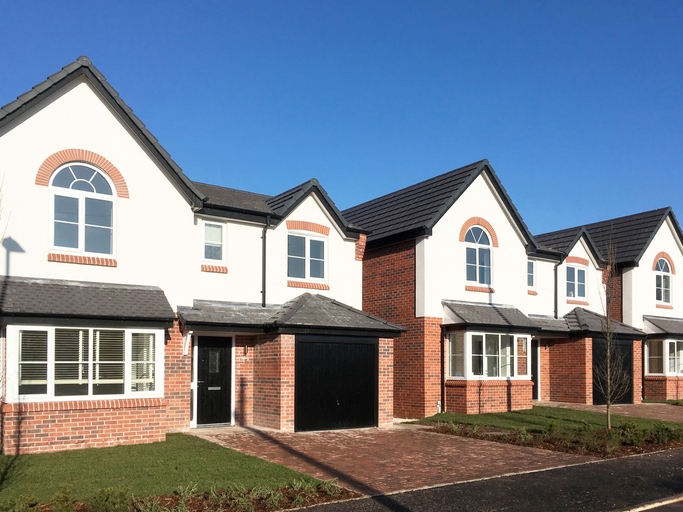
Housing stock showed its first annualized increase in nearly three years, giving hope that the market could be turning around.
The influx of houses for sale still has yet to impact prices, according to Realtor.com’s Monthly Housing Market Trends report.
“Among key factors fueling the inventory comeback are new sellers, who are listing homes at a rate not seen since 2019, as well as moderating demand, with pending listings declining year-over-year in May,” Danielle Hale, chief economist for Realtor.com, said.
Hale also said some sellers are more confident in their ability to get good offers while cases of COVID-19 are lower than last year.
Even with the rebound, active listings remained 48.5% below typical levels at the onset of COVID in May 2020. The increase also hasn’t yet provided relief for potential buyers.
“While this real estate refresh is welcome news in a still-undersupplied market, it has yet to make a dent in home price growth,” Hale said. “Importantly, as 72% of this year’s sellers also plan to purchase a home, seller expectations will likely start to reflect buyers’ needs.”
The median house price also trended upwards, reaching an all time high of $447,000 after recently crossing the $400,000 threshold in March. The prices rose at a faster year-over-year pace of 17.6% than last month’s 14.2%.
In comparison to last year’s data, buyers snatched up real estate one week quicker. May’s data pointed out that homes spent about 31 days on the market, a full week less than last year. Across the 50 largest U.S. metros, real estate spent an average of 26 days on market, with the biggest declines registered in the Southern region.
Prices may not come down anytime soon. Nadia Evangelou, director of forecasting for the National Association of Realtors, expects housing stock will continue to rise.
But it could take time for those houses to reach the market, and demand should remain strong with the typical summer increase making up for buyers who are priced out.
“Whatever happens in the economy affects first the home sales and then the home prices, so for that reason we don’t expect to see home prices affected in the summer,” Evangelou said.
Evangelou said prices will likely cool off in September, when inventory is strong and demand cools off. She expects the market to normalize in the second half of the year, but she doesn’t think things are headed for a crash.
“Maybe we are not going to see the double-digit appreciation like we had in 2021, but still home prices will continue to rise, but at a slower pace,” she said.