Rocket Mortgage Chief Revenue Officer and Rocket Pro leader Austin Niemiec came to Originator Connect 2026 with a clear message:
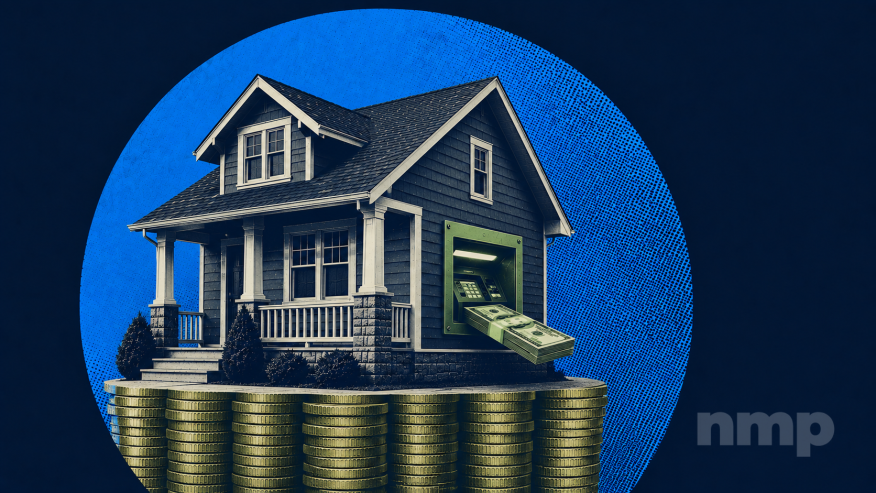
“My advice to brokers is to go hard in building a business around home equity,” he said, pointing to the opportunity in the market and the brokers who have found success in it.
The opportunity is being driven by two forces moving in opposite directions. U.S. homeowners collectively hold about $35 trillion in home equity, averaging between $300,000 and $310,500 per homeowner, while credit card balances have climbed to a record $1.25 trillion.
With average credit card rates ranging from 21% to 23.8%, compared with roughly 8.10% for home equity loans, Niemiec argued that brokers should build a dedicated home equity pipeline rather than treat the product as a sideline.
“We said we were going to get into second mortgages. [Now] we're the number one second mortgage home equity lender in the country,” Niemiec said, emphasizing that Rocket is the first nonbank to claim the top spot.
The opportunity is not limited to debt consolidation. Homeowners who are locked in low first-mortgage rates may also be reluctant to sell or refinance, creating demand for second-lien products that allow them to renovate without disturbing their existing mortgage.
The New York Times recently profiled a real-world case study of Linda Boroski, a retired schoolteacher in Ohio, who accumulated $26,000 in credit card debt to pay for medical travel. After receiving a home equity offer from Rocket Mortgage, she took out a $45,000 loan, paid off her cards, and used the rest to purchase new windows.
Citing an Achieve survey, Moneywise reported that 53% of Americans with credit card debt carry balances to cover necessities such as groceries, gas, and utilities. For borrowers who remain unable to meet their monthly expenses, consolidating debt may lower the interest rate without addressing the underlying shortfall.
It also changes the stakes. Credit card debt is unsecured; a home equity loan is backed by the borrower’s house. If the borrower falls behind, the “fresh start” promised by debt consolidation can put the home itself at risk.
That distinction is critical for brokers looking to follow Niemiec’s advice. The gap between credit card and home equity rates presents a clear business opportunity, but building a sustainable pipeline requires more than identifying homeowners with untapped equity. Brokers must also determine whether the loan will improve the borrower’s financial position or merely move mounting debt onto the roof over their head.
For Niemiec, the larger message was that brokers cannot build their businesses around the hope that mortgage rates will soon fall. Forecasts have repeatedly missed the mark, he said, and the market looks much like it did three years ago.
“The way I’m operating and our team operates, rates are going to stay like this. So, let’s go build a beautiful business,” Niemiec said. “But let’s build as if this is the new reality. Stop talking about rates falling. Build scale. Build skill. Build this home equity business. And then when rates dip, we’ll take advantage of it in a big way.”
Bottom Line For Originators
Home equity lending offers brokers a way to generate business without waiting for mortgage rates to fall. But the opportunity depends on helping borrowers use their equity responsibly — not simply replacing unsecured debt with debt backed by their homes.