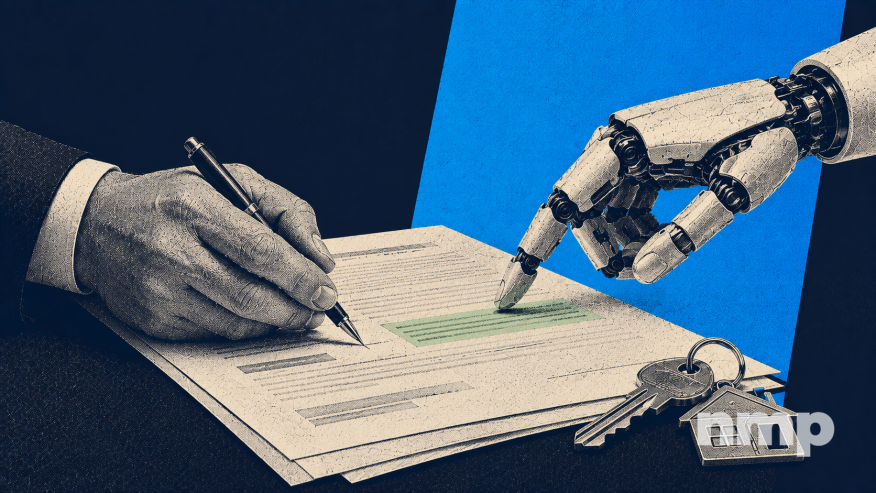
Mortgage professionals hear more about artificial intelligence each month. Some of the conversation is useful, while some of it is noise. For lenders, the real question is not whether AI sounds impressive; it is whether the technology can help move a file through a complicated process without creating new risks.
That question becomes more pressing near closing. By then, a borrower has already navigated most of the loan process. The lender, settlement team, lawyers, and borrower all work toward a deadline. A small mistake at that stage is significant. It can delay the closing and create extra work at exactly the moment everyone expects to finish.
As chief technology officer at Polunsky Beitel Green, I view AI through this lens. I believe technology should help people reach the right conclusion on time, without loosening the controls that mortgage work requires.
The Closing Stage Is Different
Discussions about AI often start with the broad promise of efficiency. In mortgage closing, that is too vague to be useful. The work occurs late in the transaction, the timing is tight, and the margin for error is slim.
I describe this phase of the process as the final leg before a borrower’s loan closes. Before that happens, the file must be checked, certified, and revised if necessary, then returned through the proper channels. Speed matters, but not by itself; the work also must be accurate.
Mortgage technology cannot be judged solely on whether it automates a task. It must fit how the file actually moves. Documents may arrive by email, while other tasks might go through direct integrations with a lender’s platform. A question may need to be sent back to the client, and a revised document may need to be sent back quickly. If those handling the file have to switch between disconnected systems, the technology can create new delays.
The useful question for mortgage professionals is simple: does the system reduce friction at the point where timing and accuracy matter most?
Where AI May Help First
One of the most practical opportunities I see is document classification. Mortgage files can be large, and they are not always organized consistently. Even within a single lender, different closers may send documents in varied formats or sequences.
This creates a real operational issue. A reviewer may not need to examine every page of a 300- or 400-page file with the same level of attention. The more valuable task is identifying the sections that matter for the review being conducted.
This is where AI can add value. Not as a replacement for the person responsible for the review, but as a tool to help that person reach the right place more quickly. If a tool can identify document types and direct the reviewer to the relevant sections, it can save time without changing who is accountable for the work.
That distinction matters. In a regulated process, speed is only helpful when it aids a better review. A faster path to the wrong answer does not equal progress.
Automation Has To Be Tested Against What A Person Would Do
I want to emphasize that whether the tool is traditional software or an AI-based system, the output must be measured against what a trained person would be expected to produce.
This requires quality control. It involves a training period and repeated testing before a process is deemed trustworthy. Timing is also important. In mortgage closing, a correct answer that arrives too late can still cause problems for the transaction.
Large language models make this especially important because they don’t operate like traditional deterministic software. The same prompt can produce different answers because the model samples probabilistically rather than computing a single fixed result. My point is not that these tools are unusable; it is that mortgage professionals need to understand how they function and design checks accordingly.
Specifically, I look for output constrained to a defined structure rather than free text, so a result either fits the expected format or gets flagged. I want the model grounded in authoritative sources — investor guidelines, the note, the closing disclosure — so its answers are anchored to the file rather than produced from memory. I expect citations, because a citation to the source document doubles as an audit trail. Where the model is uncertain, the work should route to a person rather than proceed on a guess.
Underneath all of it is ongoing evaluation: testing output against what a trained subject matter expert would produce, not just at deployment, but as a continuous measure against a known standard. The firms that adopt AI well will be the ones that can demonstrate their tools meet that standard before anything reaches a file.
Agentic AI Is A Workflow Concept, Not A Magic Word
Agentic AI has become one of those phrases that can mean too much or too little. I think about it in operational terms. Instead of viewing a process as a single large job, an agentic approach breaks the work into smaller tasks. One agent handles one defined step, while another manages a different step. A separate agent may check or audit the output.
This concept is easier to grasp outside mortgage lending. Consider an expense report. One agent reads receipts and extracts the vendor, amount, date, and category. Another verifies that information. Another enters the result into a spreadsheet. The work is a series of defined steps linked together, nothing more.
The same thinking can be applied to mortgage operations, but only when the process is well understood. Experienced operators are valuable here. AI can assist with a step, but someone must know which step is worth automating and what constitutes an error.
Data Governance And Security Cannot Be Separated From Efficiency
The mortgage industry handles sensitive financial information every day, and my first question about any AI tool that touches a loan file is straightforward: where does the borrower’s data go when a model processes it?
A general-purpose tool that retains prompts, or a provider that reserves the right to train on inputs, is a non-starter when those inputs contain nonpublic personal information. The controls I look for are specific: zero data retention, so nothing is kept after a request is processed; contractual commitments that data will never be used to train a model; and keeping that data inside a controlled environment rather than a consumer-grade tool.
Alongside those commitments are the operational fundamentals — encryption, permission-based access, validation, and audit logging. These are what make it defensible to put a mortgage file in front of an AI system at all. A system that speeds up a process but compromises data security is not an improvement; it is a liability.
There is also a cybersecurity dimension. Financial services firms are frequent targets, and I would note that the same technology can help security teams identify threats and respond faster. For mortgage professionals, that is part of the conversation too.
Looking Ahead
A few years out, I expect the shape of the work to change more than the principles behind it. The routine, well-defined review steps will increasingly run as coordinated agents — one extracting, one verifying, one checking the result against the rule. Experienced people will concentrate on the exceptions and the judgment calls that don’t fit the pattern.
I am not describing a closing process without people, but one where people spend their time where their expertise actually matters. The routine majority of the work moves faster because the technology, the controls, and the accountability were designed together from the start.
That is the standard worth holding. The mortgage industry does not need more abstract claims about AI. It needs practical questions: Can the tool reduce manual effort without compromising accuracy? Can the output be tested and audited? Can sensitive information remain protected? Can the system demonstrate it meets the standard a trained reviewer would set?
These are the questions I keep returning to, shaped by the reality of mortgage work: complicated files, tight timelines, fluctuating volumes, regulatory pressure, and a borrower waiting for the transaction to close. Used well, AI can assist with parts of that work. The firms that get it right will be the ones building the controls alongside the technology, not after.