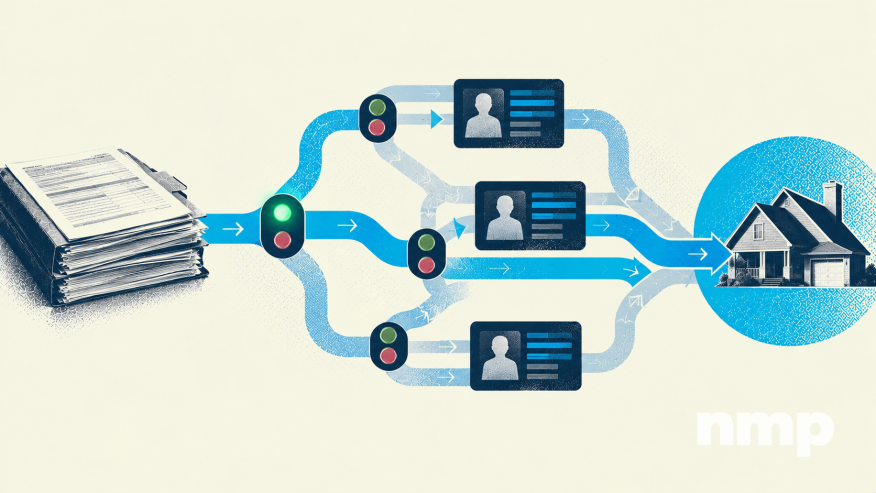
Dark Matter Technologies is integrating Mezzo's verification orchestration technology into its Empower loan origination system, giving lenders the ability to automatically route verification orders among multiple providers based on rules set by the lender.
Rather than simply adding another verification provider to Empower, the integration adds a layer that can determine which provider gets used on a particular loan, and when the system should move on to another one.
One Loan, Multiple Options
Through Mezzo's VoX gateway, Empower lenders can create verification "waterfalls" that determine which provider receives an order first and what happens if that provider doesn't return the required result.
Loan characteristics can determine the path, while each provider's response determines whether the process stops or moves to another source.
Dark Matter and Mezzo say that can replace a manual process in which a processor orders from one provider and, if no result comes back, logs into another. The system also identifies duplicate orders before they generate duplicate fees and returns results from different providers in a standardized format.
Each transaction creates a trace log showing which providers were queried, in what order, and what each returned, giving lenders data they can use to evaluate vendor performance and adjust their routing.
Empower lenders already have plenty of verification options. Dark Matter's Exchange marketplace lists providers including Argyle, Cotality, DataVerify, Equifax, Experian, Informative Research, Truework, Truv, and Veri-Tax.
Mezzo adds a decision layer over that choice.
More Providers, More Competition
Experian is already expanding its payroll verification reach through an integration with Workday, part of a broader race among companies including Equifax, Argyle, Truv, and Truework to get borrower data into lender workflows.
Cost is part of that competition. Argyle, citing Stifel's 2026 Verification of Employment and Income survey, said 43% of respondents were shifting some volume away from The Work Number and 61% were using at least one alternative provider. The survey also estimated a 13% to 14% increase in The Work Number pricing for 2026.
Using multiple verification sources isn't new. Lenders already use verification waterfalls that move a loan from one data source or method to another when the first doesn't produce the needed result.
What's different about the Dark Matter-Mezzo model is where that orchestration happens and how many outside providers a lender can put behind it.
Rather than building and maintaining separate integrations for each provider, Empower lenders can use Mezzo as a common gateway and establish their own rules for routing orders among providers already connected to the platform.
That could make it easier for lenders to adjust their vendor mix based on coverage, cost, and performance without rebuilding the underlying workflow each time.
Dark Matter Pushes More Decisions Into Empower
The Mezzo deal also fits a broader strategy at Dark Matter.
In August, Dark Matter moved document validation into its Empower point-of-sale experience, allowing lenders to identify certain document problems while the borrower is still completing the application rather than waiting until the file moves farther downstream.
The Mezzo integration tackles a different part of the workflow but follows a similar idea: automate routine decisions while giving lenders control over the rules.
Dark Matter isn't the first LOS provider to adopt Mezzo's model.
In September, Mezzo announced a similar integration with Vesta that allows lenders to route verification orders among multiple providers through a single gateway.
And Mezzo's ambitions extend beyond income and employment verification. The company says its technology is designed to orchestrate third-party services across verification, credit, fees, and automated underwriting, including Fannie Mae's Desktop Underwriter and Freddie Mac's Loan Product Advisor.
That makes verification an early test of a model that could eventually reach deeper into loan manufacturing.
Most of the vendor competition will remain invisible to LOs, but the result of those decisions may not.
When a verification source can't return the necessary borrower information, the file can require another verification method, additional documentation, or processor intervention. Automatically moving to another available source could reduce some of those dead ends.
Mezzo says its platform can produce measurable return on investment within 30 days.