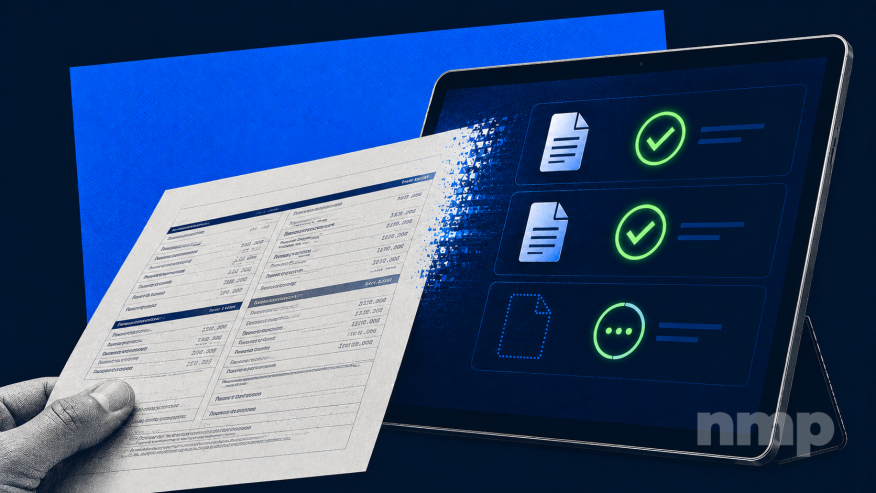
Dark Matter Technologies is moving mortgage document validation to the point of sale, giving borrowers an immediate answer about whether an uploaded document satisfies a requested loan condition.
The new capability, powered by the company’s Aiva Intelligence, classifies each document and evaluates it against the condition it is intended to fulfill. If the document is insufficient, the borrower receives a plain-language explanation and guidance for correcting the problem while still completing the application.
The operational bet is that identifying defective or incomplete documents at upload will prevent originators, processors, and underwriters from discovering the same problems later, after the file has moved deeper into production.
For loan originators, that could mean less time reviewing routine submissions and chasing borrowers for replacements. Originators receive the validation result, an explanation of how the document was evaluated, and an audit trail of the determination, according to Dark Matter.
The release extends Aiva Intelligence into Dark Matter’s built-in point-of-sale experience for users of its Empower Loan Origination Solution.
“Technology creates the most value when it becomes part of the workflow instead of another tool to manage,” Dark Matter CEO Vikas Rao said. “Bringing document validation powered by Aiva Intelligence to the point of sale gives borrowers answers the moment they upload a document, helps loan officers focus on the files that need their attention and gives lenders the flexibility to decide how work moves through their organization.”
From Document Collection To Validation
Digital mortgage applications have made it easier for borrowers to upload documents, but collecting a file is not the same as determining whether it is the correct file or whether it satisfies a loan condition.
Dark Matter is attempting to close that gap before the application moves downstream. Rather than placing an uploaded document into a queue for later review, Aiva evaluates it while the borrower is still engaged and able to respond.
Each lender controls how far the automation goes. Organizations can configure the system to satisfy certain conditions automatically, send documents to an originator for review, or combine the two approaches based on their operational and compliance requirements.
That exception-based model is becoming a central theme in mortgage automation: technology handles routine reviews while employees concentrate on uncertain or complex files.
In March, Dark Matter introduced a managed framework for deploying AI agents within Empower, with identity controls, data permissions, monitoring, and audit trails intended to keep lenders in control of agent activity.
Other mortgage technology providers are also pushing document review closer to the beginning of the loan process. Blend’s Autopilot reviews documents as borrowers upload them, checks the information against lending guidelines, and generates requests for missing documentation before underwriting.
Friday Harbor has taken a similar pre-underwriting approach with complex Non-QM loans, using AI to calculate bank-statement income, evaluate files against investor-specific guidelines, and anticipate potential conditions. The company has not disclosed results measuring accuracy, pull-through, condition reduction, or closing times.
The value of Dark Matter’s new capability will likewise depend on whether early validation produces cleaner files, not simply faster responses. An immediate automated answer saves little if it frequently requires correction by an originator or processor.
But the placement of the technology matters. Resolving a documentation problem while a borrower is actively completing an application may be easier than restarting the conversation after the file has entered a review queue, and momentum has faded.
POS Release Adds Workflow Changes
Dark Matter’s release also includes a redesigned application workspace that places the full Uniform Residential Loan Application, or URLA/1003, into a single view.
Originators can build, compare, and reprice multiple loan scenarios within an active loan. Lenders also gain configurable consent options for soft credit pulls, including consent tracking, and more selective loan-copy controls that determine which borrowers and documents carry into a new file.
The changes follow Dark Matter’s continued expansion of the Empower ecosystem. In July, LodeStar became the first integration partner on the Dark Matter Developer Platform, bringing closing-cost calculations and fee-compliance tools into Empower workflows.
The new POS release brings Dark Matter’s automation directly to the borrower-facing stage of that ecosystem. Its practical impact will ultimately be measured by what happens after upload: fewer touches, fewer repeated requests, and fewer conditions reaching underwriting.