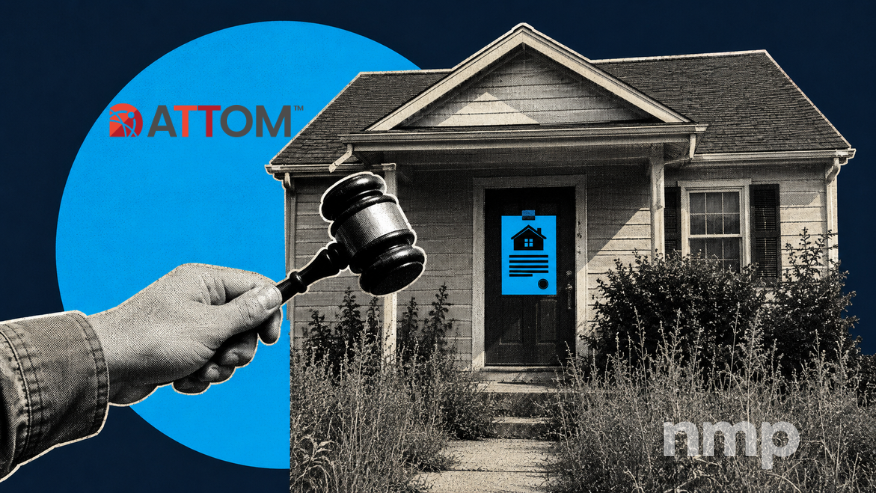
Foreclosure activity declined from April levels but remained significantly higher than a year ago in May, continuing what housing data firm ATTOM describes as a broader normalization trend in the U.S. housing market.
A total of 40,355 U.S. properties had foreclosure filings — including default notices, scheduled auctions, and bank repossessions — in May 2026, according to ATTOM. That was down 5% from April but up 14% compared to May 2025.
Nationally, one in every 3,562 housing units had a foreclosure filing during the month.
Lenders initiated the foreclosure process on 27,304 properties in May, down 4% from the previous month but up 13% year over year. Meanwhile, lenders repossessed 4,092 properties through completed foreclosures, or REOs, down 20% from April but 6% higher than one year earlier.
ATTOM said the figures reflect a continued normalization of foreclosure activity as lenders work through distressed inventory while strong homeowner equity, disciplined underwriting standards, and ongoing housing demand continue to limit broader foreclosure pressure.
Florida Leads Nation In Foreclosure Rate
Florida posted the highest foreclosure rate in the country during May, with one filing for every 2,110 housing units.
The state recorded 4,861 foreclosure filings during the month, trailing only California's 4,136 filings and Texas' 4,109 filings among the largest states.
South Carolina ranked second nationally, with one foreclosure filing for every 2,287 housing units, followed by Maryland, Nevada, and Indiana.
Among major markets, New York reported 1,932 filings, Illinois recorded 1,902, and Ohio posted 1,786.
The concentration of foreclosure activity in Florida comes as housing markets across parts of the state continue adjusting after several years of rapid home-price appreciation and investor demand.
More Activity Ahead
Donna Schmidt, president and CEO of DLS Servicing, said the increase in foreclosure activity was largely anticipated following the gradual unwinding of pandemic-era borrower assistance programs.
"The surge in foreclosures is very expected," Schmidt said in comments provided through ATTOM. "We had five years of very low foreclosures due to loss mitigation policies that allowed borrowers who could no longer afford the homes to keep kicking the can down the road."
Schmidt said recent changes to loss mitigation programs have reduced available options for struggling borrowers, exposing financial stress that had previously been delayed.
"I expected to see five years of normal foreclosure activity get condensed and forced through the system in the next two years," she said. "This is just the start."
Schmidt also pointed to rising housing-related costs in some regions, particularly Florida, as a potential contributor to elevated foreclosure activity.
"While it is hard to say what is behind the data, it is widely believed that the surge in homeowners' insurance rates has pushed many people to move out of the Sun Belt," Schmidt said. "Florida saw a huge surge in home prices during COVID, and those gains are being reversed."
She added that declining home values in some markets could make it more difficult for distressed borrowers to sell properties and fully satisfy outstanding mortgage obligations.
What It Means
For mortgage lenders, servicers, and investors, the May report reinforces a trend that has been building over the past year: foreclosure activity continues to rise from historically low levels but remains far below the peaks of the housing crisis.
The data also highlights growing regional disparities. Markets such as Florida, where inventory has been rising and price growth has moderated, are seeing foreclosure rates climb more rapidly than many other parts of the country.
While the increase in filings may create opportunities in servicing, loss mitigation, and investor financing, the broader housing market remains supported by substantial homeowner equity and significantly stronger underwriting standards than those seen prior to the Great Recession.
As a result, industry observers generally view the current rise in foreclosure activity as a return toward historical norms rather than the beginning of a widespread foreclosure crisis.