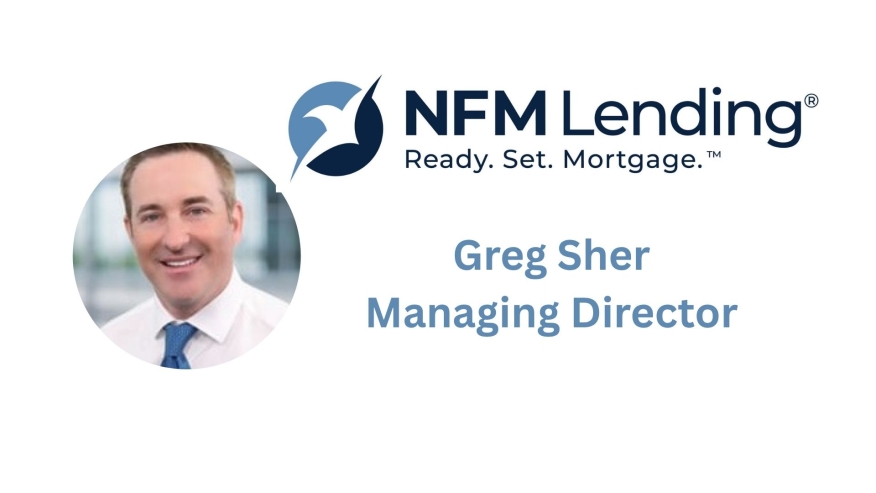
Greg Sher laughs easily, but his convictions land with weight. He said it while describing a trend that bothers him: how online rate ads and “instant approvals” have trained borrowers to treat a 30-year obligation like a coffee order — chasing eighths and promo codes as if the only thing that matters is the sticker price. “This isn’t a latte, man — it’s a house,” he says, meaning the real stakes are execution and advice: whether the preapproval will hold up with a listing agent, whether the lender can hit a tight contingency, how fees, servicing, and loan structure affect total cost over years, not days. It is classic Sher—disarming humor in service of a serious point—and it frames his wider argument that mortgage is not a commodity purchase but a consequential decision that rewards local knowledge, steady communication, and accountability when something goes sideways.
A Leader Built in Turbulence
Sher puts it plainly: “Picture one of the worst flights you’ve ever had — turbulent the entire time and you’re just praying the seatbelt sign will go off so you can go to the bathroom. That was kind of my childhood.” Those early trials, he says, gave him a “Ph.D. in people” and forged a nurturing streak he later brought to leadership. Mortgage, to him, is a refuge for talented “misfits” who didn’t study to be here but found a calling anyway. His job is to identify what people are great at and build around it, resisting the managerial reflex to lead with deficits. That strengths-first posture helps explain the moment he considers his proudest as a leader: in 2009, after the financial crisis, he moved 106 employees back to NFM. “I made it all about them,” he says. “Sixteen years later, a lot of those folks are still here.” In an industry where many careers change zip codes every two or three years, retention at that scale is a data point worth underlining.
What’s Next—and Who Leads It?
Ask Sher where the next generation of leadership will come from and he doesn’t hesitate: women. Not as a slogan, but as a forecast. “There are too many great women in our industry whose talents haven’t been on the same stages as men,” he says. He points to the resilience profile required to navigate this business without whiplash — “not getting too high when things are great, not too low when they’re not” — and argues that many emerging female leaders embody exactly that temperament. It is more than representation; it is a performance thesis.
On structure and market share, Sher is less enamored with the era’s fashionable narratives. Brokers’ share growth is real but, he notes, sometimes conflated with the scale strategies of a few giant wholesalers whose affiliated networks blur the broker/retail boundary. He acknowledges the gravitational pull of platform “flywheels” and admires what companies like Rocket are attempting. But he remains skeptical that rate pricing and bundled discounts alone can dislodge the local professional who knows the schools, the turf fields, and the Starbucks. For first-time buyers especially, context is currency. “No one has really been able to own the direct-to-consumer space from afar,” he says. “I don’t think that’s going to change.”
AI: Tool, Not Replacement
Sher’s pragmatism extends to artificial intelligence. He rejects the doom-laden prediction that chatbots will replace loan officers, while embracing AI as a force multiplier when deployed thoughtfully. At NFM, founder David Silverman and his son built in-house AI tools that connect to LOS and CRM data to trigger actionable outreach, especially to past customers. By Sher’s accounting, the tools have supported “hundreds of millions” in loan transactions. Adoption varies branch to branch; when it lags, leadership gets on the phone and trains. This is the Sher pattern: build, measure, teach, repeat.
There’s an important nuance in his view: AI won’t replace loan officers, but loan officers who learn to wield it — ethically, intelligently — will outcompete those who don’t. He bristles at blanket pronouncements yet agrees the cost to manufacture must come down, service must go up, and technology should enable both. In his framing, the goal isn’t automation for its own sake; it’s better, faster, more human lending at scale.
The Voice—and the Movement
Four years ago, Sher helped launch what he calls the first “influencer division” in mortgage, recruiting creators whose mortgage education content was drawing millions of views on TikTok, Instagram, and Facebook. One early catalyst was Scott Betley (“That Mortgage Guy”), whom Sher hired after watching the volume and quality of consumer engagement pour into his DMs. Seeing the numbers, Sher began posting the data publicly — “Don’t let this moment slip you by” — and an audience gathered. He then widened the aperture from marketing to leadership, posting about the issues executives discuss behind closed doors and the ones the “98%” — processors, underwriters, LOAs, ops, HR — live with but rarely have a microphone to address.
Out of that voice came a banner: “All of Us.” It’s a phrase you can take literally. He has printed sweatshirts and tees, building a modest, self-funded identity around the idea that the industry should stop fighting factional wars and recommit to the only stakeholder that ultimately matters — the consumer — together. Sher is careful not to commercialize it. “There comes a point where you lose authenticity if you try to push it into something that makes money,” he says. For now he’s satisfied if the hashtag shows up when someone does something genuinely good for the community. The merchandise is less a merch line than a reminder.
Calling Balls and Strikes
Sher’s platform also carries teeth. When leadership failures surface — especially around how companies close, communicate, and care for people at the end — he calls them out. If you spend years preaching “family,” he argues, you owe your people a humane exit, complete with straight talk and time for questions. This is not performative outrage; it’s a standard for stewardship, and Sher knows he can miss facts in the fog of breaking news. The responsibility of getting it right weighs on him. But silence, in his view, is worse. “In that instance, I speak for the unspoken, the people without a mic,” he says.
Reasons for Hope
The industry has endured three bruising years. Affordability is stretched, inventory is thin, rates are stubborn, and household debt is elevated. Sher has lived through four or five of these cycles. “In each one it looked like the world was ending,” he says. “In each one there was something really beautiful on the other side.” He is not naive about the timeline. Much depends on unlocking the so-called “rate-locked” majority sitting on 3% mortgages. Some of that logjam will break via life events — moves up and down market, divorces, growing families, equity cash-outs. Some will require rates to drift to a level where large numbers of owners feel justified in trading a historically low coupon for a better fit. “The question is how much time?” he says. “What will be the facilitator and the conduit to get there?” Until proven otherwise, he is betting on history — and on the industry’s stubborn habit of adapting.
The Unfinished Project
Across the conversation, Sher keeps returning to a simple alignment test: Are we doing what’s best for consumers and for the people who serve them? If so, he’s in your corner — broker, banker, or anything in between. If not, expect a raised hand, maybe a raised voice. The broadcaster in him never left; it merely found a bigger beat. And as the market grinds toward its next chapter, Sher’s mix of pragmatism and optimism, data and decency, suggests his real project is unfinished. “All of us,” after all, is less a slogan than a to-do list. The work continues.
Author’s note: Quotations and details in this profile are drawn from the author’s recorded interview with Greg Sher.