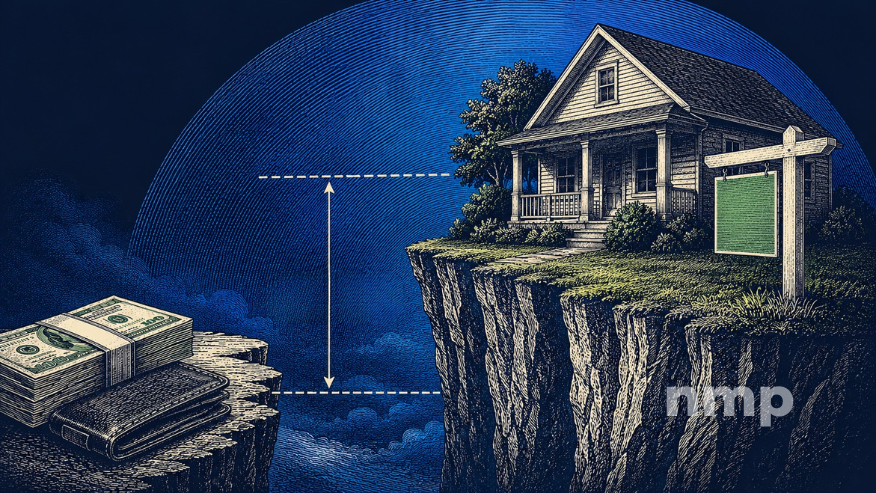
A new analysis from LendingTree found that just 37.6% of nonhomeowner households nationwide can afford a typical starter home, meaning nearly two-thirds are effectively priced out of the entry-level housing market. The median nonhomeowner household earns $55,000 annually, roughly $7,100 less than the $62,099 needed to comfortably afford a starter home.
LendingTree defines a starter home as the weighted 25th percentile of owner-occupied home values. Nationwide, the average starter home is valued at approximately $200,000.
"It's safe to say that most people don't get raises of $7,099 each year," Matt Schulz, LendingTree's chief consumer finance analyst, said in the report. "That means that bridging that gap might require a side hustle, a second job or other sacrifices. That's tough, however, especially with how many other demands people already have on their time."
California Faces The Nation's Largest Affordability Gap
While Rhode Island ranked as the least affordable state overall based on the share of households that can afford a starter home, California posted the country's largest income shortfall.
The typical nonhomeowner household in California earns $72,900, but would need an annual income of $140,676 to afford the state's average $482,000 starter home — a gap of $67,776. Only 21.3% of California nonhomeowner households earn enough to qualify.
California also requires the highest monthly income in the nation to comfortably afford a starter home, with estimated monthly housing costs totaling $3,517.
By comparison, lower-cost Southern states offered the greatest accessibility. Mississippi ranked first, with 61.8% of nonhomeowner households able to afford a starter home, followed by West Virginia, Arkansas and Alabama.
Buyers May Need To Rethink The Path To Homeownership
Despite the affordability challenges, Schulz said prospective buyers still have options if they're willing to adjust their expectations or financing strategy.
"If homeownership is a major priority, there are often ways you can make it happen, even in some of the nation's most expensive housing markets," Schulz said. "However, it may take planning and sacrifice. That may mean focusing on improving your credit, reducing debt, increasing savings, pursuing higher-paying jobs or considering smaller homes and different neighborhoods. You may have to consider different types of loans. You might even have to partner with a spouse, family member or co-buyer to make it work."
The report also found that millennials are currently the generation most likely to be able to afford a starter home, with 45.2% of nonhomeowner millennials qualifying, compared with 37.3% of Gen Z adults and 24.3% of baby boomers.
What It Means
For mortgage professionals, the findings suggest affordability challenges are becoming increasingly tied to borrower income rather than mortgage rates alone. While easing rates and growing inventory may improve market conditions, many first-time buyers still lack the income needed to qualify for even entry-level homes.
That could create greater demand for financing solutions such as low-down-payment mortgages, down payment assistance programs, FHA and VA loans, co-borrower arrangements, and other affordability strategies. As qualification hurdles increasingly center on income rather than interest rates, originators who can educate borrowers and match them with appropriate loan products may be better positioned to serve first-time buyers as market conditions continue to evolve.