Copperlane, an AI-native mortgage origination startup, has raised $4.1 million in seed funding as it looks to automate some of the most labor-intensive parts of the mortgage process, including document collection, borrower communication, and file preparation before underwriting. The funding round was led by TQ Ventures and included participation from Y Combinator, US News Digital Ventures, Eight Capital, and several angel investors.
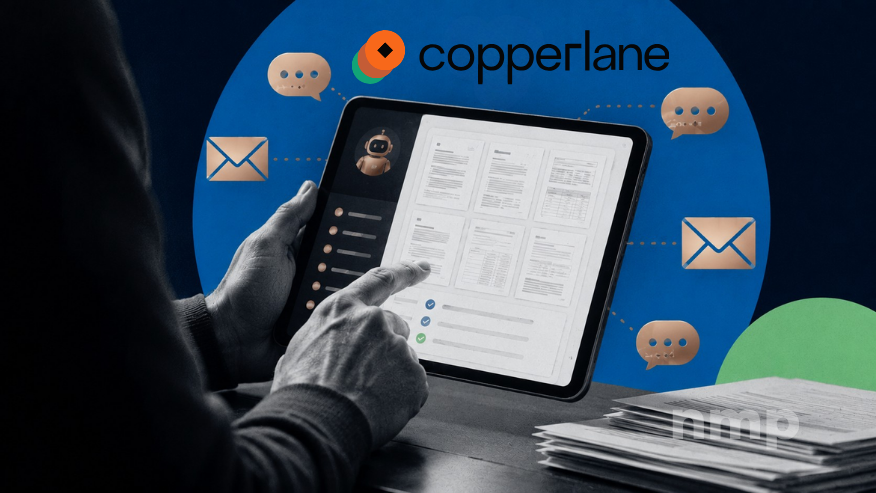
At the center of the company's platform is "Penny," an AI-powered MLO assistant designed to review borrower documents, identify potential issues, request clarification, generate Letters of Explanation, and guide borrowers through the application process. According to Copperlane, Penny can analyze documents in minutes rather than the hours traditionally required for manual review.
The startup enters the market at a time when lenders continue searching for ways to reduce costs and improve productivity after several years of elevated mortgage rates, compressed margins, and lower origination volume. While much of the mortgage industry's recent AI investment has focused on lead generation, marketing, and customer service, Copperlane is targeting a different challenge: the operational bottlenecks that occur between application and underwriting.
"We believe the mortgage market is not fundamentally limited by capital. It is limited by coordination," the company states, arguing that much of the friction in mortgage lending stems from repeated document requests, borrower follow-up, and fragmented communication rather than credit evaluation itself.
According to Copperlane, Penny serves as a central point of contact for borrowers, communicating through text, email, phone, and the company's point-of-sale platform. The system reviews borrower-submitted documents in real time, flags inconsistencies, follows up for missing information, and builds context around an applicant's financial profile before a file reaches underwriting.
The company describes its platform as an AI-native LOS rather than a standalone automation tool. Features highlighted by Copperlane include real-time document verification, automated borrower communication, integration with lenders' existing systems, and what it describes as a human-in-the-loop architecture that keeps final lending decisions under human control.
Copperlane was founded by Athan Zhang and Brianna Lin, who say their families worked across the mortgage industry, including at government-sponsored enterprises and federal housing agencies. The founders argue that many mortgage professionals spend too much time managing paperwork and administrative follow-up rather than advising borrowers.
"Mortgage lenders want to build relationships and expand their portfolios, not spend hours each week reviewing or drowning in dense paperwork," Zhang said. "Better technology for mortgage lenders directly translates into a better experience for borrowers."
The company's ambitions extend beyond simple document automation. Public product materials describe Penny as performing tasks traditionally handled by loan officer assistants, processors, and other operational staff, including document verification, borrower outreach, and portions of the initial file review process.
For lenders, that positioning raises a broader industry question: whether artificial intelligence can meaningfully reduce one of mortgage lending's most persistent operational challenges — gathering accurate information from borrowers and preparing complete files before underwriting begins.
The concept is attracting increasing investor attention. Mortgage technology companies have spent years digitizing applications, disclosures, and underwriting workflows. A growing number of AI-focused startups are now targeting the communication, coordination, and document-management work that still requires significant manual effort from processors, loan officer assistants, and operations teams.
Copperlane claims lenders using its platform can significantly reduce processor workloads while enabling LOs to handle more loans simultaneously, though the company has not publicly disclosed customer counts or detailed production metrics. Public materials indicate the platform is already being used by lenders processing more than $50 million in monthly volume.
Whether lenders are ready to place an AI system between borrowers and LOs remains an open question. Mortgage origination remains one of the industry's most heavily regulated processes, and many lenders continue to approach AI cautiously because of concerns around compliance, accuracy, and borrower communications.
Still, as lenders search for ways to lower costs without sacrificing service, the category Copperlane is targeting may prove increasingly attractive.
The company's thesis is straightforward: mortgage lending's biggest inefficiencies may not stem from underwriting decisions themselves, but from the countless emails, document requests, status updates, and follow-up conversations required to move a loan from application to approval.
If that assumption proves correct, the next wave of mortgage AI may be less about replacing underwriters and more about replacing the administrative work that surrounds them.