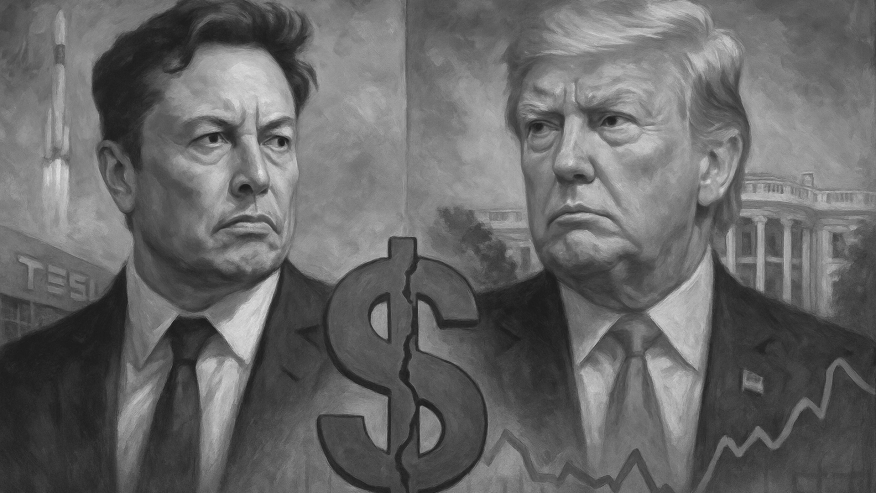
It’s been a rapid deterioration and escalation: President Donald Trump and Elon Musk, former head of the Department of Government Efficiency (DOGE), have been lobbing “bombs” at each other, almost out of nowhere.
Here’s a breakdown of what it could mean for federal and economic policies and the housing market itself.
The Falling Out
Things turned sour on June 3 when Elon Musk publicly opposed President Trump's “Big, Beautiful Bill” tax cut and spending legislation, calling it a "disgusting abomination" that is “massive, outrageous, and pork-filled.”
In response, President Trump noted Musk had “been a fan,” wore a MAGA hat, and had repeatedly called him “right about everything.” The President said he now doesn't know if he and Musk will have a great relationship going forward.
Musk took another turn, suggesting on X.com that federal files compiled on convicted sex offender Jeffrey Epstein are being withheld from the public because they contain damaging info on Trump himself. President Trump proposed saving “billions and billions of dollars” in the budget by canceling Musk’s government contracts.
“I don’t mind Elon turning against me, but he should have done so months ago. This is one of the Greatest Bills ever presented to Congress,” President Trump wrote in a post Thursday afternoon on Truth Social.
Musk said legislation is either "big and ugly" or "slim and beautiful," taking another shot at the President's current signature legislation.
Musk appeared frustrated with politics on both sides of the aisle. He posted a time-limited poll on X.com asking whether it’s time to create a new political party “that actually represents the 80% in the middle,” to which more than four out of five respondents said yes, it is. It could add to confusion about the federal policy direction housing will follow.
Federal Spending Legislation
President Trump’s “Big, Beautiful Bill” is a sweeping federal overhaul package focusing on infrastructure deregulation, massive energy project subsidies, and cuts to bureaucratic red tape, including in housing and transportation.
It also gives the Department of Government Efficiency (DOGE) expanded authority to override certain Department of Housing and Urban Development (HUD) and Consumer Financial Protection Bureau (CFPB) guidelines.
Democrats have echoed Musk’s criticism of the legislation. Sen. Chuck Schumer (D-NY), for example, said it would “effectively place a crown on Donald Trump’s head” and that it is “reckless and un-American.”
The Earlier Days
Voters grew very familiar with Elon Musk last year, who was a key driver and supporter of now-President Trump and his campaign for reelection. Musk helped convince many of which way to vote.
Earlier in President Trump's second term, Musk was appointed to lead DOGE, which was tasked with streamlining federal operations, aiming to reduce bureaucracy and cut costs. Moves by DOGE affected the housing and mortgage industries.
Under Musk's leadership, DOGE initiated significant reforms, including large staff reductions, office closures, and restructuring within a host of federal agencies like HUD, the CFPB, and the Federal Housing Finance Agency (FHFA).
President Trump’s and Musk’s collaboration extended to plans for housing and infrastructure. The President proposed creating "low-tax" zones on federal lands to encourage construction and alleviate housing shortages, for instance. Musk's influence was evident, including his vision of efficient government operations and technological integration.
Uncertainty And Mortgage Rates
You’ve heard it said that perception is reality. No doubt that's true for consumers, who’d grown used to the close Trump-Musk alliance and to seeing Musk as a trusted advisor and key figure in the Trump Administration, helping guide big changes they heard about at federal agencies.
And the word most often applied to homebuyer behavior and hesitancy in the market lately has been “uncertainty,” which has been present in the first two quarters this year with the changeover to a new administration and economic factors such as tariffs. The Musk-Trump situation now has the potential to add to those consumer sentiments, especially if it continues and escalates.
Political uncertainty stemming from the Trump-Musk rift could also affect investor confidence, and instability and policy uncertainty could add up to market volatility.
And that can push mortgage rates higher. For example, weakness in the bond market can lead to higher mortgage rates, since rates are closely tied to bond yields.
The deterioration of the Trump-Musk relationship, which casts some shadow on DOGE’s moves to date and going forward, complicates federal housing policy and economic planning. Shifts in policy direction and regulatory enforcement could have significant impacts on the housing market and, ultimately, mortgage rates.
On Thursday, Freddie Mac reported from its weekly Primary Mortgage Market Survey (PMMS) that mortgage rates actually inched down: as of the week ending June 5, the 30-year fixed rate mortgage averaged 6.85%, a decrease of four basis points from 6.89% the week before. The 15-year fixed rate mortgage averaged 5.99%, down the same amount from 6.03% as of May 29, 2025.
With the Trump-Musk feud continuing to evolve, mortgage professionals will be watching the bond market and federal housing policy maneuvers closely to gauge potential impacts on rates in the weeks ahead.