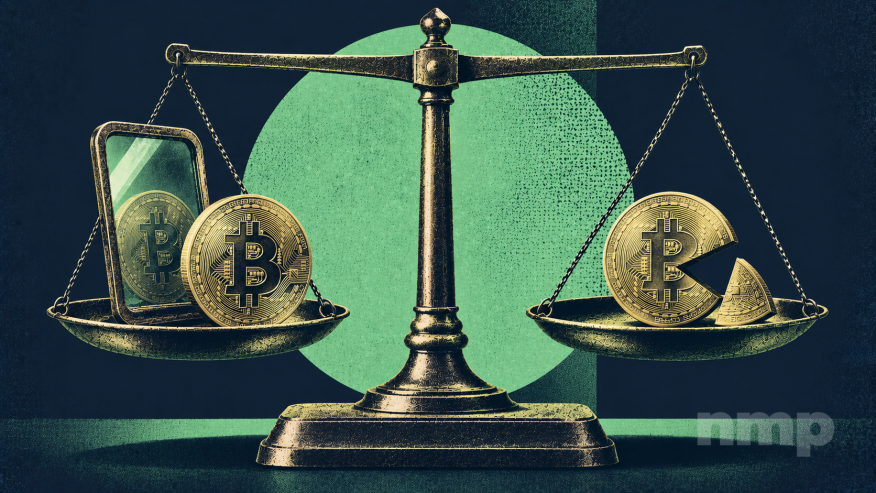
Better Mortgage says it may reuse bitcoin pledged under its recently launched crypto-backed mortgage program, provided it maintains an equivalent amount for return at payoff.
Rehypothecation allows a lender to use pledged collateral in another transaction or financing arrangement. The borrower would receive an equivalent quantity of bitcoin when the loan is repaid, though not necessarily the original bitcoin transferred into custody.
The detail emerged shortly after Better and Coinbase moved the program into general availability. The product combines two loans originated by Better: a first mortgage designed to meet Fannie Mae guidelines and a separate loan that provides the down payment.
The second loan is secured by the pledged bitcoin and a second lien on the home. Borrowers must pledge bitcoin worth at least 250% of the down-payment loan, meaning $250,000 in bitcoin would support a $100,000 loan.
At closing, the bitcoin is transferred from the borrower’s Coinbase account into Better’s custodial account on Coinbase Prime. Coinbase provides the custody technology but does not originate or underwrite the loans or determine when collateral may be liquidated.
The program had already drawn political scrutiny before its broader rollout. In an April 30 letter to Federal Housing Finance Agency Director William Pulte, seven senators urged the agency to prevent Fannie Mae and Freddie Mac from purchasing crypto-backed mortgages. They cited cryptocurrency volatility, the two-loan structure, the 250% collateral requirement, and potential risks to borrowers and taxpayers. The letter did not address the reuse of pledged collateral.
How Long The Bitcoin Remains Pledged
Better’s crypto-backed mortgage page describes the release of pledged bitcoin in two ways. One section says it remains in custody for the life of the down-payment loan and is returned when that loan is repaid. Another says it is returned after the conforming mortgage is repaid or refinanced.
The company has indicated that repaying the down-payment loan alone would not release the bitcoin. Under that explanation, the collateral remains pledged until the first mortgage is repaid or refinanced.
The structure protects borrowers from price-driven margin calls. A decline in bitcoin’s value will not require additional collateral or trigger a sale. Better may liquidate the bitcoin if a borrower remains delinquent for 60 days, while foreclosure proceedings on the home would begin separately after 180 days.
Because Better may reuse the collateral, borrowers would receive an equivalent quantity of bitcoin when it is released.
Bitcoin Funds The Down Payment, Not Qualification
Borrowers must still qualify for the conforming first mortgage under standard income, credit, and debt-to-income requirements. The bitcoin supports a separate loan that provides the down payment; it does not become qualifying income or replace conventional underwriting.
Although commonly described as a bitcoin-backed mortgage, the product combines a Fannie Mae-conforming first mortgage secured by the home with a second loan secured by bitcoin and a second lien on the property.
Better and Coinbase previously reported more than $260 million in projected demand from the program’s waitlist. That figure represents anticipated borrowing, not approved applications, rate locks, or funded mortgages. The companies have not disclosed how many loans have closed.
Different Approaches To Collateral
The Better structure differs from a five-year revolving line of credit launched Sept. 3 by APX Lending. APX allows borrowers to pledge bitcoin, Ethereum, or a combination of both.
APX says the collateral is held in segregated BitGo Trust cold-storage wallets, can be verified on-chain, and is not rehypothecated. Borrowers can access up to 60% of the collateral’s value at annual rates ranging from 10.49% to 11.99%.
The trade-off is exposure to changes in cryptocurrency prices. If the LTV reaches 90%, APX says it may sell enough collateral to reduce the ratio to 85%.
APX’s line is not a mortgage, although borrowers may use the proceeds for housing or other expenses. Any debt used toward a home purchase would still need to be disclosed and considered during mortgage underwriting.
The two products take different approaches to collateral risk. Better prevents price movements alone from triggering liquidation but may reuse pledged bitcoin. APX says it keeps collateral segregated but may partially liquidate it when its value declines enough to reach the company’s threshold.
Early Demand Still Developing
Data from Borrow on Bitcoin, a comparison site owned by Sypher Capital Management, provides an early look at how consumers are exploring these products.
Between May 14 and Aug. 27, visitors researching bitcoin-backed mortgages requested an average of $317,023, nearly three times the $104,289 average for general bitcoin-backed loans. However, 8.6% of mortgage inquiries proceeded to a lender, compared with 29.6% of general loan inquiries.
Across its mortgage and general loan inquiries, the site recorded $74.2 million in requested volume after removing automated traffic and duplicate visitors. The total represents borrower inquiries rather than originations.
Borrow on Bitcoin also reported that custodial lenders averaged a 10.42% effective APR on Aug. 27, compared with 4.39% for its TVL-weighted group of on-chain loans. The gap has averaged approximately 600 basis points since the index began publishing in June.
The products are not directly equivalent because custodial and on-chain borrowing involve different structures and borrower protections. APX’s advertised rate range, beginning at 10.49%, nevertheless falls close to the custodial average reported by Borrow on Bitcoin.
Crypto-backed credit is giving digital-asset holders more ways to obtain liquidity without selling their holdings. For mortgage originators, the emerging market brings a new set of questions about qualification, collateral, pricing, and how borrowers intend to use the proceeds.