America’s housing wealth may be measured in the trillions, but the home equity opportunity confronting loan originators differs sharply from one state to another.
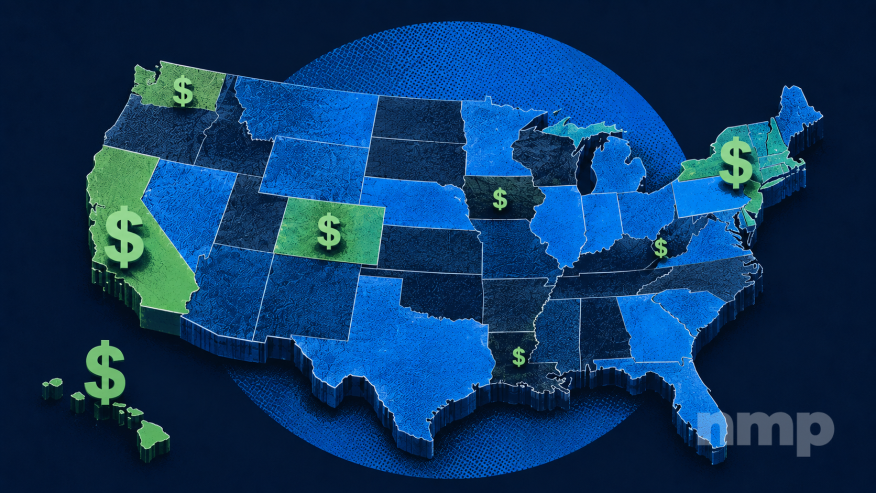
Home equity shoppers in Hawaii reported median equity of $425,000 during the first quarter, more than three times the $130,000 reported by shoppers in Iowa and West Virginia, according to a new LendingTree analysis of nearly 967,000 inquiries.
California ranked second with median reported equity of $350,000, followed by Massachusetts at $345,000. Utah ranked fourth at $300,000, while New Jersey and Washington tied at $295,000.
The findings provide loan originators with a more localized view of a market often discussed only in national totals. U.S. households held an estimated $34.9 trillion in home equity during the first quarter, calculated from $48.7 trillion in real estate assets and $13.8 trillion in mortgage debt, according to Federal Reserve figures cited by LendingTree.
But the amount homeowners may be able to borrow depends on more than that national balance sheet. Property values, existing mortgage debt, borrower qualifications, product limits, combined loan-to-value requirements, and state-specific rules can all affect how much equity becomes accessible.
“The enormous differences among states are a reminder that the home equity story can look very different depending on where you live,” LendingTree Chief Consumer Finance Analyst Matt Schulz said. “For some homeowners, their house can provide a huge financial cushion. For others, there may be far less wiggle room.”
High-Equity Markets Extend Beyond California
Hawaii not only recorded the highest median reported equity, but 80.5% of the state’s shoppers said they held at least $200,000 in equity.
Massachusetts posted the largest share above that threshold at 78.4%, followed by California at 76.8%. Rhode Island, which ranked seventh with median equity of $285,000, had 75.5% of shoppers report at least $200,000.
Several smaller or less obvious markets also appeared near the top of LendingTree’s ranking:
- Utah: $300,000
- New Jersey: $295,000
- Washington: $295,000
- Rhode Island: $285,000
- New Hampshire: $275,000
- Colorado: $255,000
- Idaho: $250,000
For originators, the results suggest that higher-balance home equity prospects are not limited to the nation’s largest housing markets. They are also concentrated in states where years of home-price appreciation have left prospective borrowers with substantial reported equity.
That does not necessarily make those states the largest home equity origination markets. LendingTree did not publish the number of inquiries, requested loan amounts, approval rates, conversion rates, or funded volume for each state. A high median equity figure therefore measures potential borrowing capacity among shoppers, not total market demand.
A Different Market At The Bottom
Iowa and West Virginia tied for the lowest median reported equity at $130,000. Only 34% of Iowa shoppers and 32.6% of West Virginia shoppers reported holding at least $200,000.
Mississippi and Arkansas followed at $140,000, while Oklahoma and Kentucky each posted median equity of $145,000.
The gap matters for lenders and originators building home equity campaigns. A product designed for high-balance borrowers in California may have a narrower addressable market in states where shoppers report smaller equity positions. Lower available equity can affect requested balances, combined LTV calculations, pricing, and whether the economics of a small second lien work for the borrower and lender.
The findings add another layer to an equity market already being reshaped by mortgage-rate lock-in. Second-lien lending reached an 18-year first-quarter high this year, with HELOCs and other second liens accounting for 54% of equity withdrawals, according to ICE Mortgage Technology.
Home equity loans also captured a record share of mortgage transactions in 2025 as homeowners increasingly sought cash without replacing low-rate first mortgages.
For loan originators, LendingTree’s geographic breakdown offers a starting point for deciding where higher-balance HELOCs, closed-end seconds, alternative-documentation products, or other home equity options may have the strongest fit.
“Americans are sitting on an extraordinary amount of housing wealth, but home equity isn’t the same as money in the bank,” Schulz said. “Accessing it generally means selling the home or borrowing against it, and borrowing comes with costs and risks.”